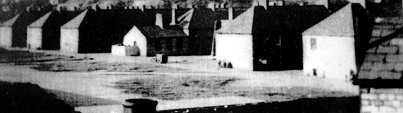
I am constantly shocked at the dilapidated state of our town’s streets, at the numbers of abandoned and derelict buildings and yes, at the run-down state of many of the business premises. All of this is in marked contrast with the showy opulence of suburbia, which by the way, stretches now deep into our once pristine rural heartlands. All of this begs the question, just where did all that investment money from the International Fund for Ireland and the European Union go?
 John McCullagh
A Life Saved
‘You’re for it, ye oul b****x!! I’m getting my da for you’.
A hasty retreat – a slammed door and he was gone. Nervous tittering from the class. The schoolmaster was aware of thirty pairs of eyes drilling into his skull. Internally he felt torn and twisted – anger, shame, embarrassment and indecision vied for dominance. It probably showed on his face too, and in his demeanor. He knew it was imperative to avoid any show of weakness. His continued authority depended on how he might react right now. Any hint of remorse or frailty would be seized upon and exploited. But he felt remorse.
17 th Century Happenings

When the most powerful chief in Gaelic Ireland, Hugh O’Neill, who had taken the English title of Earl of Tyrone, submitted to Lord Mountjoy, the Queen’s Lord Lieutenant at Mellifont Abbey in Louth in the early 17 th century, the English Conquest was all but complete.
General Geology of our Region
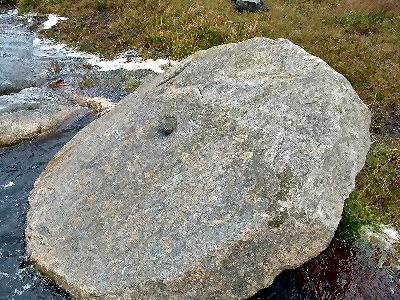
Earth is about four thousand seven hundred million years old. Rocks, the subject of geology, are regularly re-cycled and the oldest known surviving rocks (in Greenland) are some three billion years old.
Tourist Guide: In from the South
Tourist Guide to
South Armagh , Newry and South Down
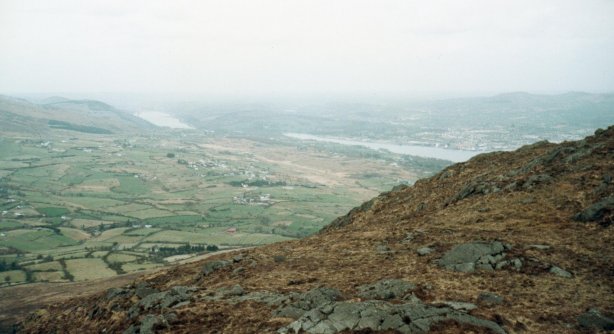
Among the many outstanding features of our beautiful region of Ireland are the rugged mountains, the rivers and lakes, the fast-expanding city and the coastal strip and resorts where ‘the Mountains of Mourne sweep down to the sea’. We have every reason for pride. We will here look in turn at all of these features and trust that our uniqueness is sufficient to entice the foreign visitor (and perhaps the lonely exile) to renew his acquaintance with our friendly shores. We trust that the slideshows that accompany this writing adequately illustrate our best features.
John O’Hagan, Young Irelander
John O’Hagan was born in Market Street Newry on 19 March 1822. He was an able student and well schooled. At the age of twenty-three he was called to the bar and joined the Munster Circuit.
Child Smuggling in Wartime
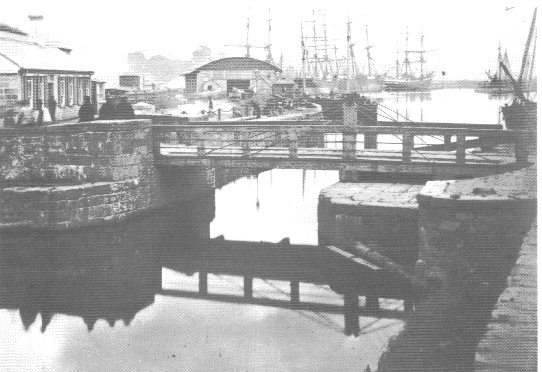
As I recall, the war years in Newry did not prove to be too disruptive as far as I was concerned.
I remember of course, the dreaded ‘rationing’!
Who of my generation doesn’t?
Each family was supplied with a book of coupons that were used to obtain food, sweets (candies), chocolate, etc. and clothing. Even if one had sufficient coupons for a particular item it did not guarantee availability.
As regards clothing, a lot of ‘making do and mending’ was necessary. Fashion did not change for the duration of the war and so there was not the need to have a new outfit each season. My mother was handy with a sewing machine and knitting needles and so I didn’t feel deprived in that area. We were of course deprived of a lot of food-stuffs but can honestly say we were never hungry. All of the ‘fattening’ foods were very heavily rationed and so the nation as a whole was extremely fit and healthy and slim!
And of course there was always the odd bit of smuggling done from the then “Free State”. Dundalk was the nearest town in the Free State, only thirteen miles down the road. Doubly convenient for my smuggling as I often travelled to Dundalk to visit my maternal Grandparents. Oh! yes! I hold my hands up……I was guilty of trafficking in illegal goods! Not by choice you understand. More by manipulation!
My Grandparents would send me home to Newry laden with butter, sugar, meat etc and tobacco for my Dad’s pipe. These items were concealed about my person. I always returned from a visit to Dundalk at least half a stone heavier! Butter, I recall, was wrapped in what was known as ‘tar paper’. It had a waxy surface with a sandwich of tar. This paper prevented the butter from melting as it nestled around my middle.
About half way along the Dundalk to Newry road there was a British Customs Post. Vehicles were obliged to stop and driver and passengers were required to produce their Identity Cards and submit to being searched. Identity Cards contained personal information; i.e name, address, place of birth, etc. and had to be carried at all times. Sometimes a less than thorough search would take place and following the card check the driver would be waved on to continue his journey. Usually a child on board was passed over and not subjected to a search.
On one occasion however I thought my number was definitely up! My Grandmother had bought me a pair of beautiful black, fur-lined boots. I was instructed to wear them home and act as though I’d had them for ages! Difficult, as they were so obviously new! A lot depended on which Customs Officer was on duty and on that particular night it was bad news! The female officer, who had definitely missed her vocation…..had she been German she’d have been a top-ranking S.S. Officer……was on duty!
The reputation of this woman was known far and wide and she had the ability to reduce the toughest of men to nervous wrecks! It was an extremely cold and wet winter night and she ordered everyone off the ‘bus. We followed orders and lined up inside a very basic wooden hut with concrete floor. She took great pleasure in hand searching each passenger, especially those who appeared frail and/or vulnerable. I stood alone and quivering in my new boots and she pounced! Then followed the usual interrogation; where had I been, for what purpose, how long had I been there and where was I going to and was I returning to Dundalk and if so, when? She then surveyed me from head to feet……and yes, she did notice my boots! I was ordered to remove my boots. She deliberately put my boots to one side while she continued her search of other passengers. Tactics. She was no more than a bully and thought she would reduce me to tears and perhaps admit that my boots had been purchased in the Free State. I honestly thought she was going to confiscate the boots and send me home bare-foot! While she allowed the other passengers back on the ‘bus, she gave me further interrogation and a lengthy lecture and reluctantly returned my boots. I was all of nine years old and although my stomach churned and my lip quivered, it was not until I was safely home that I allowed the tears to flow. My parents were horrified when I related the incident and would happily have reported that officer but it would only have served to draw further attention to me and my family on future trips to Dundalk.
I continued to travel, mostly alone, to Dundalk to be with my adored Granny and Grandfather. I grew up betwixt and between Newry and Dundalk.
Indeed a fortunate child.
Tommy McGrath
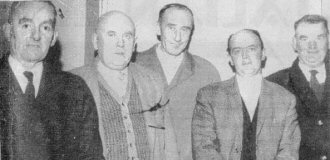
Our Council of the 1960s, under pressure from Government departments and various interest groups, capitulated to demands to raze an historic and much loved part of our town to make way for the principal trunk road between Ireland’s major cities of Belfast and Dublin. The decision was incomprehensible. And very unpopular
Poor Clare Sisters
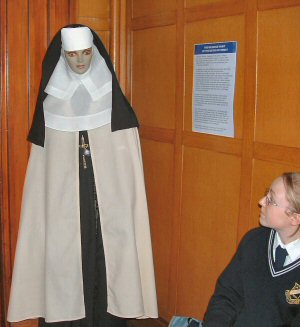
It would be difficult to exaggerate the contribution made by the Sisters of Saint Clare to the education and social welfare of the children of Newry’s working classes for the past one hundred and seventy three years.