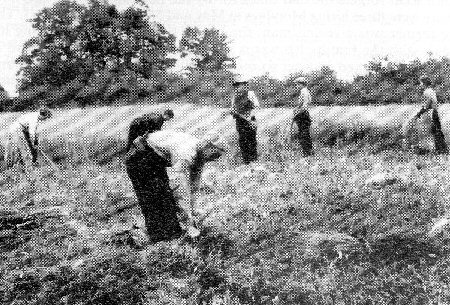
Tomorrow week [I write on Fri 23 April] is Mayday, traditionally one of the chief dates in the Irish calendar of olden customs.
 John McCullagh
Tilt, Wobble, Stretch Earth
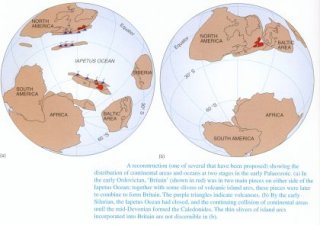
The ’tilt, wobble and stretch’ of planet Earth on its celestial path contribute to long-term variation in environmental conditions that determine whether and where on Earth life can thrive or even be sustained.
It was a Yugoslav scientist who first closely studied these variations and proposed a theory based upon them, and named for him, the Milankovitch cycle.
It has to be the bull!
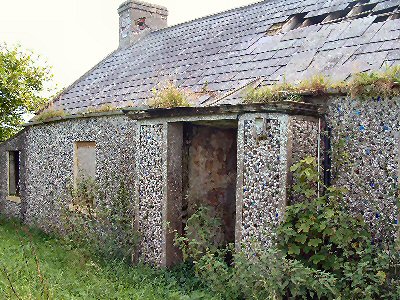
‘Me brother-in-law had a venture once with the little people. Sure the cattle were breakin’ something awful and trampin’ down crops beyond anything. An’ he, poor man, wus fair bothered with them an’ with cuttin’ branches all over the place t’ stop their capers.
Bishop Michael Blake
Your editor is a huge fan of our present Bishop of Dromore, Dr John McAreavey – a man with the common touch, but also a leader of great piety, erudition, compassion and zeal. But first we want to write a few notes on a number of his predecessors.
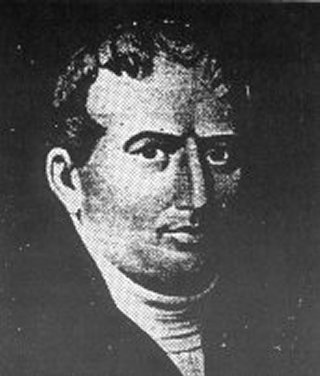
Dr Michael Blake – whose virtues have already been extolled on these pages [use Search Engine above!] – served as Bishop of Dromore for almost twenty eight of the mid-nineteenth century years, from 1833-1860. Amongst his legacies to the people of Newry and District are the Bishop’s House and St Colman’s College but far more important, the arrival in Newry of the Christian Brothers and the Mercy Sisters. All of my people have benefited from their devotion to the education of the poor, and there are few Catholics in the district who would not admit the same.
Michael Blake was born in Dublin in 1775 and entered the novitiate of the Irish College in Rome at the age of seventeen. He was ordained in Dublin in 1799. His years of ministry to God were turbulent years and hungry years – including the Great Hunger – and years of continued struggle for Catholics to freely practice their faith. He was parish priest in Dublin for a few years before returning to Rome where he undertook the restoration of the Irish College there. He became Rector of the Umberian College 1826-1829. In 1831 he was transferred as Parish Priest to Westland Row, Dublin. He became keenly aware of the poverty and squalor all around him. He knew also of the work there of the Sisters of Mercy and of the Christian Brothers. The founders of these two Religious Orders, Catherine McCauley and Edmund Rice were his personal friends.
When Dr James Kelly – who had brought the Poor Clares to Newry in 1830 – died in 1833, Michael Blake was appointed to succeed him. He was the first to be consecrated in the Cathedral of SS Patrick & Colman on St Patrick’s Day 1833. His term of office saw the building, re-building or completion of some 25 churches in the diocese and of 16 parochial residences. He set up a Seminary at Violet Hill, still today the site of an excellent Boys Grammar School and of the Bishop’s House that he had built. A devout man he showed intense personal interest in the growth of sodalities and confraternities in his diocese.
Through his direct offices, on 2 Feb 1851 he brought the first Christian Brothers [Br Peter Scannell and Br Vincent McDonnell] to Chapel Street, Newry. As well as a school of learning the Brothers at first provided breakfast for over 100 poor children of the town.
Still not content, he implored the Mercy Sisters to come to Newry. In 1855 his wish was granted. Among the group of first nuns, under Mother Catherine O’Connor of Kinsale, was one local girl, Elizabeth Russell of Killowen. Soon they opened a refuge for down-and-outs and a public laundry in which poor young girls could be provided with a means of support.
A Co-adjutor, John Leahy, was appointed to assist the ageing bishop in 1854. Through his influence the Dominicans [Order of Preachers] were invited to Newry in 1871. The magnificent St Catherine’s Church was soon after built.
Bishop Blake died 6 March 1860 at the age of 85. He had contributed more to the future welfare of generations of Catholic people here than any man before or, possibly since. He rests in St Mary’s Cemetery.
‘Lives of great men all remind us
We must make our lives sublime
And departing, leave behind us
Footprints in the sands of time.’
Willy the Wisp
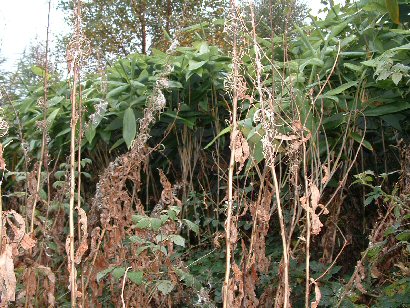
I’ve told you about Geordie-Look-Up and about Jonny-Go-Slap. One of these days I’ll tell you about Johnny-The-Go. But today’s story is about Willie The Wisp.
Now these new-fangled scientists would tell you of a marsh phenomenon known as Will O’ The Wisp where decaying matter gives off methane gas that occasionally catches fire to emit an eerie light. Never listen! It happened this way.
Halloween: Joe the Ass
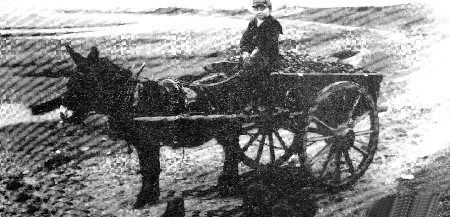
Hallow Eve, the night when resurrected spirits roamed the earth, was, then as it is now an eerie festival designed for robust enjoyment.
1930s Upper North St Residents
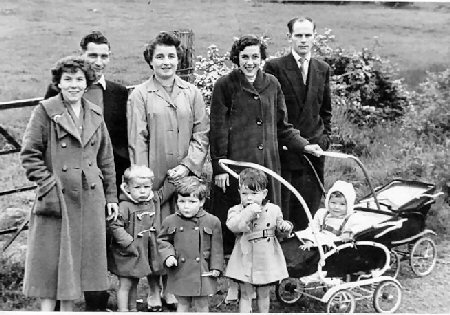
Eileen Malone of Cherrywood Grove grew up in Upper Mill Street. Later she met and married Thomas Malone, butcher, of Upper Water Street and raised a fine family including Jackie, now married to Jennifer of Concern. I showed the photo here to her and asked for comment of the district in which she was reared.
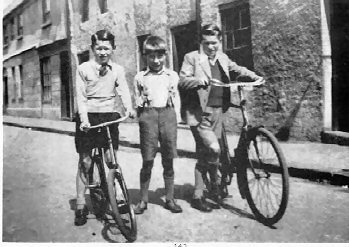
‘Of course I remember this. Next door, going down towards North Street was a little shop called Ma Hughes. She and her daughter who was called Nellie sold chips and peas and ice cream. Next was a house and a little shop also. The people were called Sheridans. Next to that was the home of the Stokes. Then there was a large hoarding and bills were posted on it telling what was on in the town. After was another little sweetshop [boiled sweets, toffee apples] tended by a lady called Maggie Vickers. She was married to a man called Meekan, a seaman and they had two children, a girl called May and a boy called Joe. Maggie also had a brother called Joe Vickers who had a barber’s shop close by. This Joe was the grandfather of two girls Marie and Joan Vickers who married two McAvoy brothers and live still in Mourneview Park.
Close by there lived two brothers Freddie and Peter Troy, tradesmen who worked all week in Balbriggan and came home only for weekends. They had a sister who was called Madge and she was married to a man called Ronald Rogers. They had a son and two daughters. They lived in Magennis Street and would visit the Troys on Sunday. One daughter, Stella survived into adult life but the other children died young. Also visiting the Troys were a brother and sister Bridie and Paddy Vickers who were the children of Joe the barber just mentioned. This was about the year 1933. Joe the barber was a fattish man with black, shiny hair and tanned skin. He cut hair in a room at the back of the sweet shop, down past Converys in Upper North Street.’
Paul Mac [Guestbook!], a much younger man, tells me his parents in the 50s had one of the two houses, round the corner in Chapel Lane [the other was the Magills, John etc]. Ma Hughes’ name was Margaret. Ma Hughes, in later life resided with her daughter Nellie in the small pensioner bungalows of Clanrye Avenue. Ma died c. 1968. Her daughter Mary Ellen [Nellie] died in 1985. Another daughter Lily married a Mr Lennon and she lived to the ripe old age of 102, and is only recently deceased.
Roar of the Greasepaint
Recent mention of the Newry Drama Festival brought the memories flooding back!
So many of my childhood hours were spent in the Town Hall devouring whatever was on offer and quite often participating.
Fews Glossary E-G
Earnest sum of money given to seal a bargain
Edge ‘she gave him the sharp edge of her tongue’
‘her temper’s a bit on edge’
Endeavour attempt, ‘I’ll do my endeavour to get it’
Erran errand
Easy come by easily procured, ‘money’s not easy come by’
Even impute, suggest ‘would you even the likes of that to me?’
Even one’s wit have words with, ‘I wouldn’t even my wit on ye’
Every each, ‘there’s an egg in every nest’
Elsin awl
Face ‘the thing has no face on it’ [unlikely story]
‘it seems faceable’ [probable]
Fadge portion, cake of bread, ‘give him a wee fadge for his pocket’
Failed ill, ‘She’s looking failed recently’
Fall to an invitation to eat
Fangled entangled, ‘the goat’s all fangled in the tether’
Farl the fourth part [of griddle bread]
Farness distance, ‘What farness off do you live?’
Farntickles freckles
Fashion habit, ‘Looking wise is a fashion he has’
Fault blame,‘he faulted him for spreading the story’
Favour ‘he is ill-favoured’, ‘he favours his mother’s side’ whereas his brother is ‘the dead spit of himself’
Feart afread
Fetch report, story ‘he always has some fetch in his mind’
Fickle unsafe, ‘the ice is in a fickle state’, ‘a fickle fence’
Fidge fidget, n. a small amount, ‘I couldn’t give a fidge’
Figary trick
Find notice, ‘do ye find the cool breeze now?’
Finished perfected, ‘a finished blackguard’, ‘a finished scholar’
Fire throw, ‘he fired a stone at me’
Fissling rustling noise
Fizz impress, ‘too much drink never fizzes him’
Take a fizzic! calm down!
Fix condition, ‘in a fix’
Fell on stumbled, ‘the horse fell on me’
[in his] feet barefooted
Feth faith
Fettle condition, ‘in fine fettle’
Flake beat, ‘he flaked the oul’ mare’
Flaming angry, ‘she was flaming’
Flammery flattery
Flatter coax, ‘I’ll flatter it out of him yet’
Flipe an untidy or careless woman
Flit to change one’s abode
Flite a scolding or silly person
Fly sly, ‘he’s the fly boy’
‘she’d fly at ye with her tongue’
‘he let fly with his boot on me shin’
‘he let fly wi’ his fists’
Flush a pool of water, a drain; with loads of money
Fluster confuse, hurry
Fogg moss
Follow trade, occupation, ‘what does he follow?’
Folly follow, ‘he’d folly me anywhere’
Foot ‘hay on foot’ [still uncut] ‘child on foot’ [beginning to walk]
‘lost his foot [slipped]
Footing authority, ‘he’s no footing over me’
Footings small clamps of turf
Footy small, mean
Footery awkward
Fornenst opposite
Forrad forward
Ill-founded without foundation
Founder chill, ‘the cow has a founder on her’
Foxy sly
Fozy light, spongy
Framed made-up, ‘a framed story’
Freak out of the ordinary
Free loose-talking , ‘she’s too free wi’ her tongue’
From at a distance, ‘I saw him from me a bit before it began’
Full-farmer well-to-do farmer
Full-drunk very drunk
Furbish to dress, brighten
Gather up assemble and arrange, harvest, ‘gather ’em up there’ ‘Gather yerself up, there, before the priest comes’
Get-up outfit ‘some get-up she had on!’