Disposal Chutes

FuneralChute.jpg

‘When the coffin was carried into the Chapel of Ease there was a howl of derision from the striking gravediggers.  They were cheering and clapping and yelling.  We were mortified!  My late aunt deserved a better send-off than this!’  Judy Andrews told reporters outside the funeral parlour in Quebec. 

‘They were waving banners and laughing and pointing.  I don’t know whether they deserve better pay and conditions of service, but now, after this display I believe they deserve hanging!’

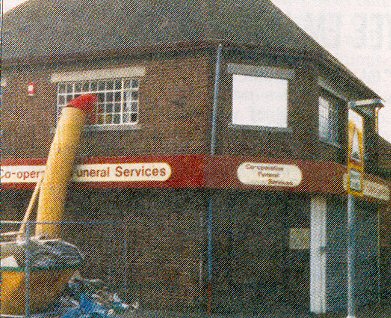
Co-operative Funeral Services, from the photograph above, appear to have found a solution.

Cure for warts

haystacks.jpg

‘Is it the Wart Stone of Kilnasaggart ye’re after?’ he asked me, for I was hoking in the field beside that ancient pagan/Christian monument.  It was.

‘An’ shure I know it well.  It’s an aul stone wid a hole in it that wud be good for warts.  But shure Thomas Mallon used till be able to cure them as well.  He jist came down an’ said, ‘Kate – for that’s me name – Kate, here’s a penny’ and I niver had a wart since, thank God for it’s they’s the quare articles!  He cud do it with childer and big people both.  He wud give ye a penny and say ‘I’ll buy yer wart’.  He was paddy’s father that’s now in bed.’

‘A wee black snail will cure them too. Cut it open ye must an’ rub it on the wart an’ then ye stick it on a thorn, an’ as it withers away, away goes yer wart.  Ye must meet it on the way an’ pick it up.  It’s no good whatever till look for it.  I tried it meself once an’ it’s a sure cure.

But doctors don’t like them cures.  They’d like that people shouldn’t know about them.’


In my youth, we sliced open a potato and rubbed it on the warts.  You had to say a prayer at the same time.  And then bury the two halves of potato.  Why is it that people seldom suffer from warts nowadays?  Perhaps all the prayers and the cures banished them like the snakes!

Fews Glossary, C

killeavyoldchurch.jpg

Caddie boy, good-for-nothing person
Cadge  carry, ‘ye’ve had a long cadge o’ it’
Cadger little, sometimes applied to a pedlar
Cailey  gossip, round of calls on neighbours
Call  arrange, need, demand, right:
  ‘he’s called an auction’
  ‘you had no call to hit him!’
  ‘ * got the best call’ i.e. was in greatest demand
  ‘what call have ye to take that attitude?’
Called  spoke with abuse: ‘he called me out a name’
Came on happened: ‘What came on ye?’
Cant  Auction
Canty  jaunty: ‘A canty boy, him!’
Cap  to stop; a cover; takings from a collection
Care  family; ‘look after my care’ i.e. wife and children
Carried away: foolish, vain
Carry on misbehave
Case-equal similar; ‘they’re case-equal on truth-telling’
Case-hardened accustomed; ‘she’s case-hardened till he’s ways’
Cast  reject, reproach; ‘I cast that away’
  ‘he cast up her shortcomings to her face’
Casting-match quarrel
Causey the paved stones around the kitchen door
Cementing beating; ‘he got a well-deserved cementing’
Chanceable changeable
Chander scold
Change one’s feet put on dry socks/boots
Chap  blow; ‘he wants a chap on the lug’ [he deserves hitting]
Charge load, caution; charge the gun; I charged him to be civil
Chattered bruised, shattered
Chats  small; just chats of potatoes; wee chats like you!
Chay-cow a term used to soothe or call a cow
Check  chide
Cheek  impertinence
Cheep  talk; ‘if he cheeps, he’ll rue it!’
Chew upon it think it iver
Childer children
Chitter mutter; ‘chittering there to yerself like a looney!’
Chivvy chase
Clabber mud
Clamp  a covered heap [e.g. of potatoes]
Clart  a slovenly, dirty woman; ‘that clart, is it ye were with?’
Clarty  dirty, wet
Clash  repeat
Clash-bag story-teller [pejorative] ‘the worst clash-bag in the area’
Clash  blow; a clash on the face
Clat  to scrape
Clock  a hook, a thump; ‘I got a clock on the nose’
Clift  wise; ‘he’s on’y half-clift’
Clinch  agree, settle
Clip-blow a frolicsome boy or girl
Clipe  a thump; also a tell-tale
Clitter-clatter idle talk
Cliver  generous; ‘he’s cliver wi’ he’s money’
Clean  quite; ‘he’s clean done!’
Clemmed perished; ‘clemmed wi’ cold’
Clods  fragments of earth; also verb, to strike with …
Clocks  beetles
Clocking brooding [women or hens] ‘What’s she clockin’ on now?’
Cloots  feet
Close  secretive, mean; ‘she’s a close one’
  ‘he’s that close, he’d starve ye and him wi’ plenty’
Clout  rag, blow; ‘he’d a dirty clout for a hanky’ 
  ‘a clout on the head might mend he’s ways’
Clutch  flock of chicks
Coarse rough, stormy; ‘a coarse fellow’, ‘a coarse day’
Cock up to set up, ruin
Cocked-up conceited; ‘a cocked-up upstart’
  ‘aisy cocked-up’ – easily flattered by praise
Cod  a foolish person

Comic-cuts comic weekly like Beano, Dandy
Coggle shake
Cogly  unsteady
Cold-rifed a person who suffers from cold
Colley  soot smuts, as sometimes float round a room
Colloge gossip
Cogglety-corry see-saw
Condescend agree, assent; ‘she’ll condescend in the end’
Come at illicitly approach[ed]; ‘he was come at by the other side’
Come by respected; ‘he was well come by on both sides’
Come down drop caste; ”twas a come down for her till be marryin’ him’
Come in prove; ‘that’ll come in handy sometime’
Come round ‘he’s comin’ round’ [recovering] ‘he’ll come round to the right of it yit’ [accept the logic] ‘a man come round till his time of day’ [of his age]
Come over repeat; ‘he come over it again and again’
 ‘she can’t keep from comin’ over things’
Commerce dealings; ;have no commerce with him’
Connu-going easy-going
Con memorize
Consate pride
Conversible pleasant
Convoy large number; ‘a quare convoy there’
 Accompany; ‘he convoyed me part of the way’
Cop catch; cop the ball, ‘he’ll cop it when he’s da comes home’
Copies capers; ‘never heed her copies’
 ‘cutting copies’ – acting silly
Cop pig a young pig fed by hand
Corn [heart of] kind, thoughtful person
Cornaptious disagreeable
Country crop  rough, bowl-shaped haircut
Counted reckoned; ‘it’s not counted well to talk that way’
Coup upset; he couped the cart
Cove cave, souterrain
Cowe intimidate
Crab scold, [noun] short-tempered old woman
Crabbit adjective from above; ‘he’s that crabbit he’d differ from his own wife, if he had one’
Crack news; ‘what’s the crack?’
 Short time; ‘I’ll be with you in a crack’
Cranch crunch
Crap crop
Creepy a low stool, usually on 3 legs
Crig stub, as in ‘toe’
Croak about to die
Crowlie the runt, smallest of the litter
Crucify annoy, hurt; ‘she’d crucify ye with her tongue’
 ‘these boots have me crucified!’
Cruddle curdle
Cruel fine, big, very; a cruel big girl, cruel rich, a cruel funeral
Cruel hand unfortunate person; ‘his troubles have made a cruel hand of him’
Crulge crouch
Cut many! ‘the dog cut me’ [bit] ‘a cut of bread’
 ‘a cut of hay’ [auction term] ‘draw cuts’ [lots]
 ‘I’ll niver cut mate in that house again!’ [eat a meal]
Cutty small; a cutty spoon/pipe etc.  ‘a wee cutty’ [boy/girl]
 Applied also to worn-out spades, knives etc.
Cure tonic; ‘you’re a cure for sore eyes’
 ‘he’s a tarribe cure’ [he is fun]
Curleys kale
Cute astute; ‘a quare cute wee man’: cute hoor – one of the stars of the Mahon inquiry!

Harl o’ bones wi’ no gumption!

ShawlWoman.jpg

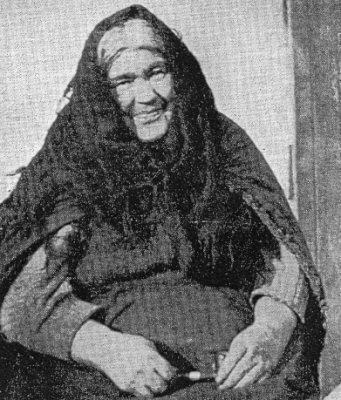
‘The very childer used till be afeared till daunder on the hill in the heel of the evenin’.  An’ no wonder.  Shure it wus said the wee people wud be dukeing in sheughs ready till grab them.  Many a mallyvogin I got meself because of them.  An’ sure the cattle themselves wudn’t as much as munch a bite once darkness had come.  Ay devil the blade wud they let in their gubs!

Read moreHarl o’ bones wi’ no gumption!

History of Newpoint Players

Newpoint Players [Newry and Warrenpoint] were formed in 1946 shortly after the war.  For most of those years since, the drama group has produced at least one full-length play a year, frequently several other productions and has boasted a strong team of actors, producers and back-stage players.  This is our most long-lasting, consistently successful and highly talented arts group, bringing fame and world renown to this little corner of the earth.  The number of actors and actresses of stage and screen who owe their first chance to Newpoint is legion.  Among the successful, talented and famous of the moment are John and Susan Lynch, Gerard Murphy, Sean Kearns, Peter Balance, and Gerard Rooney but there are many more. This short piece merely notes some milestones in Newpoint’s illustrious history.

Without doubt a talented, driving director is central to any amateur group.  He/she will gather together kindred spirits and initiate a number of thespian projects.  Before the triumph of television this was the only available form of public entertainment for the masses of people.  Sadly the audience numbers has dropped over the years and the age profile has considerably advanced.  However we had a few hundred season ticket holders this year – in line with recent years – and a full house for the home team.  Newry’s audience is famous for its critical discernment and its warm welcome to visiting teams.  Such an audience is central to success. 

It is fitting before reviewing its almost sixty year history, to acknowledge that Newpoint today is stronger perhaps than at any time in its past.  This is the more remarkable for the loss in recent years of stalwarts like Regina Hanratty and her husband, Owen Mooney, Derry Murphy and especially Sean Hollywood.  The reason of course is that under the powerful tutelage of the latter a number of excellent people including Sean Treanor, Donal O’Hanlon, Geraldine Fitzpatrick, Declan McDaid, Susan Lynch, Pauline Lynch, Laurie Hodgett and Patricia McCoy have developed their talents in a variety of ways and directions.  A few patrons including your humble scribe, were concerned about the group’s will to go on after Sean’s untimely death.  We ought not to have worried.  It is scarcely an exaggeration to say that Newpoint has gone from strength to strength, almost inspired to greater efforts by the absence of their former mentor.


Founder member and first director – an acclaimed actor and stage designer – was Livy Armstrong.  His early team included Nancy Murphy, Ken Kenny, Marie Shortall, Jim Murphy, Mona Garland and Patrick Carey.  Most of this successful crew was long-serving.  Many early productions were Shakespearian – acknowledged as among the most difficult productions to undertake.  In 1949 they played A Midsummer Night’s Dream.  From 1950, under Patrick Carey’s direction – which was to dominate the Society for fifteen years – they produced Hamlet, Macbeth and The Merchant of Venice [Shakespeare], The Devil’s Disciple and The Doctor’s Dilemma [Shaw]  Relative Values and Hay Fever [Coward] and many more.  T P Murphy [of GAA, Shamrocks and HE fame] was club treasurer from the beginning up to 1960.  Unbelievably Charlie Smyth started his Newpoint career more than 50 years ago, as did Owen Mooney.  The wonderful Sam Russell from Banbridge, who recently featured in The Rose [Siobhan O’Duibhan] and who sadly died during last year’s festival, started too in the fifties and played Shylock in The Merchant of Venice in 1958.  Dr Ted Wilson became Newpoint Chairman in 1957 and his wife Nora remained our leading actress for many years.  From 1956 and for five years Mary Andress alternated with Patrick Carey as Newpoint producer.  In 1958 Newpoint’s Arms and the Man won the Athlone based All-Ireland festival for the group for the first time.  Mary also produced The Quare Fella [Behan]  Playbill [Rattigan] and You Never Can Tell [Shaw]. 

In the early sixties Seamus Mallon [still today our M.P.] joined, as Mary Andress left Newry for good.  Seamus directed Thornton Wilder’s Our Town, a production still remembered fondly by some members and patrons.  It won everything, including the society’s second All-Ireland title.  Thelma Marley became then, and for a long time remained the group’s leading lady.  Other directors of the late sixties included Joan Cassidy [Poker Session and The Birthday Party] and Olga O’Callaghan [The Heart’s a Wonder].  The latter in 1965 saw Gerard Murphy’s debut.  Liam O’Callaghan, our star from 1952, left and turned professional in 1968. 

There was a Newpoint hiatus in the early seventies until Sean Hollywood was elected artistic director in 1976.  The flowering that followed was truly stunning and space does not permit me here to list all his achievements.  Suffice to say that this writer agrees with the general consensus that Sean Hollywood was our Man of the Century up until his untimely death.   Drama was merely the first and chief one of his many accomplishments but in this field alone he became feted not just throughout Ireland and Britain but even wider afield.  I knew of American parents who sent their children during vacation to Newry to join in Hollywood’s Youth Drama group!  That of course, was merely his summer sideline.  It was in his blood.

Sean had acted in Philadelphia Here I Come [1969] and others.  Over the next decades some of his personal triumphs included Habeus Corpus [Bennett] 1979, John, Paul, George, Ringo and Bert [Russell] and One Flew Over The Cuckoo’s Nest 1981, Under Milk Wood [Thomas] 1982, Darkness At Noon [Koestler] 1984 – the latter being an amateur premier and a career highlight.  Blood Brothers [Russell] celebrated Newpoint’s fortieth birthday.  He formed the Youth Group in 1980 and dedicated much of the rest of his life to its development.  It staged numerous successes.  In 1991 Dundalk International Festival was won by Newpoint’s Brighton Beach Memoirs [Simon].  In the following year Marat-Sade [Weiss] won Ulster and, for the third time, the All-Ireland titles for Newpoint.  Gerry McNulty designed the award-winning set, and remains at the heart of Newry’s musical and drama scene today, again designing the ‘Portian Coughlan’ set this month.


The following notes are based on Drama Festival programmes of former years exhumed from my personal collection.

24 years ago the Drama Festival Committee looked not unlike that of today, except for former members who have passed on.  Included in their number were Violet Durkan, Eileen Mooney, Gerard McNulty, Ann Boyle, Margaret Nolan, Charlie Smyth, Sean Hollywood and Mr & Mrs Wilson.  On stage Scott Marshall gave none of his ten awards to Newpoint who performed Hugh Leonard’s Summer.  I remember this production well and enjoyed it.  Derry Murphy shared the stage with seven other Newpoint players including Sean Hollywood, Kate Fearon, Joe Duffy and Donal O’Hanlon.  Bart, under Alan Martin won with Ayckbourne’s Confusions. 

Derry Murphy won best actress at Newry in 1981 with One Flew Over The Cuckoo’s Nest – but shortly after died in a freak motor accident.  The team came third.  Sean Kearns and John Lynch, soon to turn professional, were on stage too, as were Patricia Hollywood and Joe Duffy and a host of others.  Alan Nicholl gave the premier award to 33 Players for Kennedy’s Children [Patrick].

In 1986 Newpoint had no entry in Newry Drama Festival, won by Guinness Players with A Streetcar Named Desire [Tennessee Williams].  By 1994 Newpoint was back to winning ways with Waiting For Godot [Beckett].  Declan McDaid, Joe Smyth, Sean Hollywood, Gareth O’Hare and Gerry Daly formed an exceptional, winning team.  Bart came second.

This year [2004] in addition to awards already recorded, Newpoint won Best Sound [Michael Murphy] and best Stage Manager Trassa Davey.  The group was also credited for most ambitious choice.  We are labouring under a distinct embarrassment of riches! The future looks bright!
  

Damolly Mill

WilsonsMillTimepiece.jpg

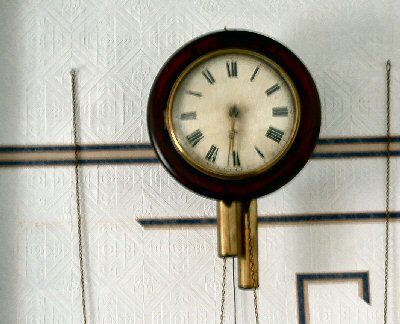
Up until a generation ago if one was fortunate enough to find work locally as likely as not one worked in the mill.

Damolly Mill closed down twenty five years ago, in 1979.   For almost two and a half centuries it – under different guises – had provided employment and community life for ten generations of local people.


Read moreDamolly Mill

Cock of Slieve Gullion

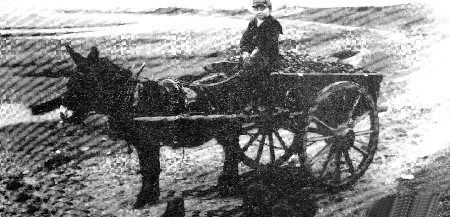
donkeycart.jpg

‘Finn McCool was on the mountain this day with he’s wife, which of them I won’t be sayin’, for they do tell me he had more than one.  An’ he was sore put about when he heared that the Scotchman wus comin’ an’ he jist after a wakeness of sorts an’ still shaky on his pegs.  He’s wife though had her wits about her.


Read moreCock of Slieve Gullion

Anal Wedges

‘The most common excuse is that they ‘fell unto’ these objects.  We frankly find that hard to believe, especially the bloke with a can of shaving cream wedged in his anal passage.  There was three feet of battery wire firmly attached and wound round it.  He didn’t even attempt an explanation of that!  To be honest, we thought at first it was an even more perverse form of human bomb, and no doctor would approach him!

The spokesman for the University Medical Centre at Leiden in Netherlands warmed to his subject.

‘Sometimes it’s fruit, vegetables, bottles, billiard balls, a Barbie doll, candles or screwdrivers.  This mania particularly afflicts men of between forty and sixty years of age.’

I don’t know why, but that last comment unnerved me somewhat!

‘But they can be of any age’ he continued, as if to reassure me.