Newry sits on the Clanrye River where County Down meets County Armagh, roughly halfway between Belfast and Dublin. It’s a compact border town built around one of Ireland’s earliest canals, and it works well either as a half-day stop or as a base for exploring the Mourne Mountains and the Ring of Gullion.
This guide breaks down genuine things to do in Newry by who’s actually doing them — families with young kids, couples after a quiet afternoon, teenagers who need more than a museum, and anyone planning a night out or a weekend trip. You’ll find historic sights, scenic walks, shopping options, a comparison table on prices and visit length, and a couple of ready-made itineraries so you’re not left guessing.
Table of Contents
Is Newry Worth Visiting? The Quick Answer
Yes — with a caveat. Newry isn’t built around a single headline attraction, so if you’re expecting one landmark to anchor a whole day, you’ll be disappointed. What it does have is a genuinely layered history: it grew up around the Newry Canal, one of the earliest summit-level canals built in Ireland or Britain, and that canal-town character is still visible in the warehouses, quays and towpaths around the centre.
It’s also a border town in the fullest sense — split historically between County Down and County Armagh, and a few minutes’ drive from the frontier with the Republic of Ireland. That position has shaped its trade, its politics and its accent for centuries.
Most usefully for a visitor, Newry works as a gateway rather than a destination in isolation. It’s close enough to Slieve Gullion Forest Park and the Ring of Gullion that you can spend the morning looking at the cathedral and the museum, then be walking a forest trail within twenty minutes. For a day out or a stopover between Belfast and Dublin, that mix of town-centre sights and quick access to real countryside is what makes Newry worth the detour.
What Is Newry Famous For?
Newry’s reputation rests on three overlapping things: the canal, the trade it enabled, and its position on the border.
The Newry Canal opened in the 1740s to move coal from the Tyrone coalfields down to Carlingford Lough, and it’s recognised as one of the first summit-level canals built in Ireland or Britain — meaning it climbs to a high point and descends on both sides, rather than running along a single gradient. That canal turned Newry into a working port town, and the linen and general merchant trade that grew up around its quays gave the town its commercial identity through the eighteenth and nineteenth centuries. Warehouses and merchant buildings from that period still line parts of the town centre.
The other thing Newry is known for, particularly within Northern Ireland, is its status as a border town. It sits only a few miles from the frontier with the Republic of Ireland, which made it a significant checkpoint location during the Troubles and a natural stop for cross-border trade before and since. That identity still shows up in everyday things — number plates, radio stations, shopping habits — more visibly here than in towns further from the frontier.
Is Newry More Catholic or Protestant? A Straight Answer
Newry has a majority Catholic population, and it has done for a long time — this is consistently reflected in Northern Ireland Statistics and Research Agency (NISRA) census returns for the wider district. The town’s position within County Armagh and County Down, both historically nationalist-leaning border areas, follows the same pattern.
That said, Newry isn’t religiously uniform. There’s a Protestant and Church of Ireland presence in the town too, visible in its churches and its history, and the balance varies by townland and ward rather than being flat across the whole district. For exact current percentages, NISRA’s ward-level census breakdowns are the reliable source — a general guide like this one is better used for context than for precise figures.
Top Historic & Cultural Attractions in Newry
Newry’s most-visited sights cluster within a fifteen-minute walk of the town centre, which makes it easy to cover the historic core on foot in a morning.
Newry Cathedral (St Patrick & St Colman)
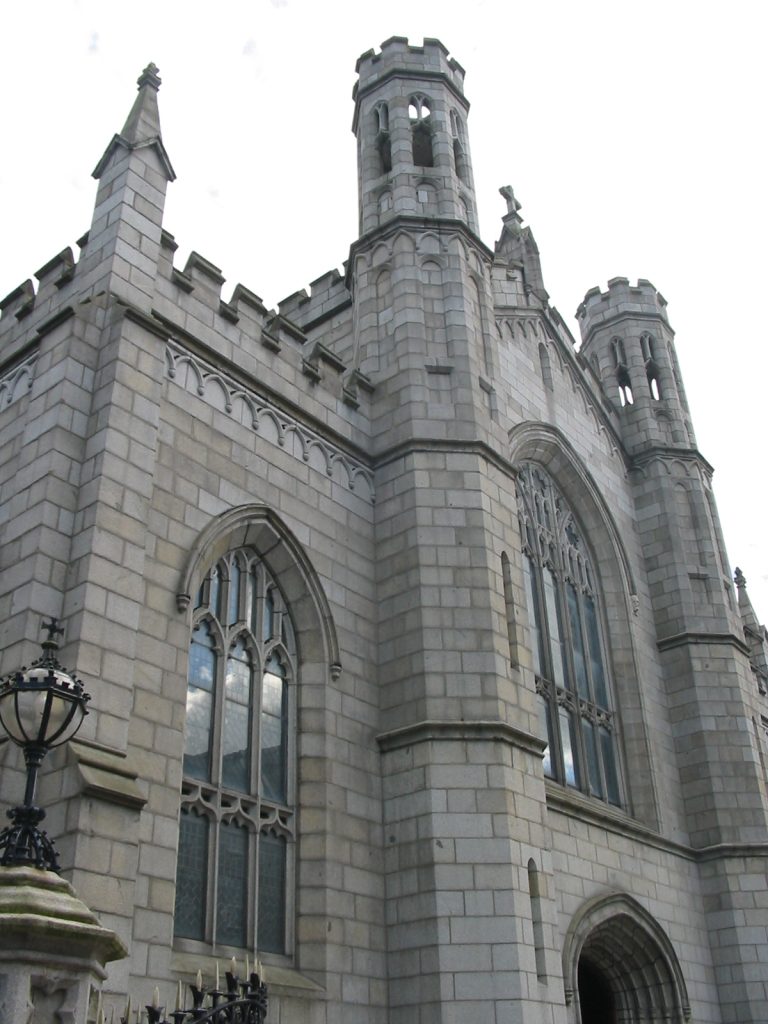
Newry Cathedral, dedicated to St Patrick and St Colman, was designed by the architect Thomas Duff, with construction beginning in 1825 — notably before Catholic Emancipation in 1829 eased restrictions on Catholic church building in Ireland. That timing makes it one of the earlier large-scale Catholic building projects of the period, funded through local subscription. It’s been extended and redecorated since, most visibly with mosaic and stained-glass work added later in the century. It’s a working cathedral rather than a museum piece, so services take priority, but it’s usually open to visitors outside those times, and there’s no charge to look inside.
Newry and Mourne Museum at Bagenal’s Castle
The Newry and Mourne Museum is housed inside Bagenal’s Castle, a fortified merchant’s house dating back to the town’s earliest development as a planned settlement. Inside, the collection covers the canal, the linen and merchant trade, the town’s medieval origins, and more recent social history, alongside rotating temporary exhibitions. It’s a small museum rather than a major national collection, so an hour is usually enough. Admission has traditionally been free for council-run museums of this kind in Northern Ireland, though it’s worth confirming current opening days before you go, since local-authority museums sometimes run reduced winter hours.
Ballymacdermott Court Tomb
A few minutes’ drive from Newry, on the slopes overlooking the town, Ballymacdermott Court Tomb is a Neolithic court tomb dated to somewhere between 4000 and 2500 BCE — meaning it predates the pyramids at Giza. It’s freely accessible, with a small parking area and a short walk up to the tomb, which consists of a court and two burial chambers built from large stone slabs. There’s no interpretation beyond a basic sign, so it helps to have context beforehand — our overview of the history of Ireland in episodes is a useful primer on where sites like this sit in the broader prehistoric timeline. The view back over Newry makes the short detour worthwhile even if court tombs aren’t usually your thing.
Derrymore House and Its National Trust Grounds
Derrymore House, just outside Newry near Bessbrook, is a thatched, single-storey house built for Isaac Corry, MP for Newry, who took up residence there from 1776. Corry went on to serve as Chancellor of the Irish Exchequer, and local tradition holds that the Act of Union of 1800 was drafted at Derrymore — giving the house a specific place in Ireland’s constitutional history beyond simply being an attractive building.
The property is managed by the National Trust. The house itself opens to the public on only a limited number of days each year, but the grounds — mature woodland, walking paths and a walled garden — are generally accessible for longer. It’s a quiet, low-key stop rather than a headline attraction, and works best as an add-on to a Slieve Gullion or Ring of Gullion day rather than a destination on its own.
Scenic Viewpoints and Walks Around Newry
The Newry Canal Way is the obvious starting point for anyone who’d rather walk or cycle than just look at things from a car park. It follows the old towpath of the Newry Canal for roughly 20 miles between Newry and Lough Neagh at Portadown, and you don’t need to do the whole route — even a short stretch from the town centre gives a clear sense of why the canal shaped Newry.
For views rather than flat walking, Bernish Viewpoint, a short drive from Newry toward Newtownhamilton, looks back across the Ring of Gullion and the surrounding drumlin country. Picnic benches at the top make it a practical lunch stop rather than just a photo opportunity.
Flagstaff Viewpoint, on the other side of town toward the border, looks out over Carlingford Lough and the Mourne Mountains, and its position right on the frontier with the Republic of Ireland adds extra interest — you’re looking across two countries from one car park.
Days Out in Nature: Slieve Gullion, Ring of Gullion and Kilbroney Park
Slieve Gullion Forest Park is Newry’s easiest big day out in nature. The forest drive loops through mature woodland with several parking and picnic points, and a walking trail from the top car park leads to the summit passage tomb, one of the highest-altitude Neolithic monuments in Ireland, with views across the Ring of Gullion on a clear day. An adventure play area near the visitor centre makes it workable as a family day out rather than just a walk for adults.
The Ring of Gullion itself — the ring of hills formed by an ancient volcanic ring dyke around Slieve Gullion — is designated an Area of Outstanding Natural Beauty and rewards exploring beyond the forest park if you have a full day rather than an afternoon.
Kilbroney Park in Rostrevor is about a 20-minute drive from Newry and adds mountain scenery of a different kind — mountain biking trails, a children’s play area, and the “Narnia Trail,” a short woodland walk linked to C.S. Lewis, who spent time in the area and is said to have drawn on the Mournes for inspiration.
Shopping in Newry: Buttercrane Centre vs The Quays
Newry has two distinct shopping options, and which one suits you depends on what you’re after. Buttercrane Shopping Centre, in the town centre, is a compact indoor mall with a mix of high-street chains — useful for a wet-weather browse or picking something up quickly, with parking attached.
The Quays Newry, on the edge of town along the river, is a larger, more outlet-style retail park with bigger-format stores and free outdoor parking. It’s the better option for a proper shopping trip rather than a quick stop, and its position close to the border has historically made it popular with cross-border shoppers depending on currency and pricing at the time.
Neither is a destination shopping centre on the scale of a major outlet village, but between the two you can cover most practical shopping needs without leaving town.
Things to Do in Newry With Kids
The Newry and Mourne Museum works reasonably well with kids, especially if they respond to hands-on displays — check what temporary exhibition is running, since interactivity varies. Slieve Gullion Forest Park is the stronger option for a full family day out: the forest drive is easy with young children in the car, and the adventure play area gives them somewhere to burn off energy that isn’t a car park.
The Newry Canal Way towpath is flat and traffic-free, making it one of the few genuinely buggy-friendly walking routes in the area, and older kids can manage a longer stretch on bikes. For a rainy day, Buttercrane Shopping Centre’s indoor setting is a practical fallback.
Dedicated indoor play centres open and close in and around Newry fairly often, so it’s worth checking current listings locally rather than relying on any single named venue — the outdoor options above are reliably there year-round.
Things to Do in Newry for Couples and Adults
A slower version of Newry works well for couples: a walk along the canal towpath, a coffee stop, no pressure to tick off every attraction in one visit. Grounded Espresso Bar is a good option in town for a proper coffee if you want to sit down between stops rather than grab something on the move.
For the afternoon, Derrymore House’s woodland grounds are quiet enough for a proper wander without crowds, and Bernish or Flagstaff Viewpoint both work well toward evening when the light suits the views. If you’re staying later, the town has a reasonable spread of restaurants for dinner, though it’s worth checking opening hours and booking ahead at weekends.
Things to Do in Newry for Teenagers
Newry is more workable for teenagers than the historic sights alone suggest, though it’s fair to say it doesn’t have a permanent, headline teen attraction the way a bigger city might. The town centre has a cinema for current releases, which covers the obvious rainy-afternoon option. Escape rooms and trampoline parks have both had a presence in and around Newry at various points, but venues in this category open, close and change hands often enough that naming one here risks being out of date — a quick check of current listings before you travel is the safer bet.
What holds up reliably is the outdoor side: mountain biking at Kilbroney Park in Rostrevor is a genuine draw for teenagers who’d otherwise roll their eyes at a forest walk, and the Newry Canal Way is flat enough for a longer bike ride with friends.
Newry at Night: Pubs, Restaurants and Evening Activities
Newry’s pub scene has a long history behind it — the town’s position as a market and canal port meant it accumulated a fair number of drinking establishments over the centuries, some with their own stories worth knowing before you go looking for a pint. For the colour and history behind the pubs rather than just an address list, a local pub crawl through Newry’s history covers that ground properly.
For a straightforward night out, the town centre has a mix of traditional pubs and more modern bars within easy walking distance of each other, along with a reasonable number of restaurants for dinner beforehand. As with the teenager section above, specific venues, live music nights and opening hours change often enough that checking current listings is more reliable than a fixed list — but the density of options in a fairly compact centre means you’re rarely walking far between one place and the next.
Quirky and Lesser-Known Things to Do Near Newry
If you want quirky things to do in Northern Ireland beyond the standard Titanic-and-Giant’s-Causeway circuit, the area around Newry has a few genuinely odd options. Flagstaff Viewpoint lets you stand in one spot and look across an international border marked by no fence, wall or checkpoint — a strange thing to actually see rather than just know about.
Slieve Gullion carries its own folklore alongside its geology: local legend ties the mountain to Cú Chulainn and the Fenian cycle, and the lake at the summit is traditionally said to have magical properties in some versions of the stories — an extra layer of interest on what’s otherwise just a very good walk.
Kilbroney Park’s Narnia Trail is a genuinely under-the-radar stop for anyone interested in C.S. Lewis, tracing his connection to the Mourne landscape in a way most visitors to Northern Ireland never get shown. And Ballymacdermott Court Tomb, sitting largely unmarked on a hillside above the town, is about as far from a polished visitor attraction as prehistoric Ireland gets — which is exactly its appeal if you’ve had enough of gift shops.
Newry Attractions at a Glance: Cost, Visit Length and Who It Suits
Exact admission prices and opening hours change often enough that we’d rather point you to check directly than print a figure that’s wrong by the time you read this. What follows is a realistic planning guide based on how each site typically operates, so you can build a schedule without guessing.
| Attraction | Typical Cost | Typical Visit Length | Good For |
|---|---|---|---|
| Newry Cathedral | Free to enter | 20–30 minutes | Anyone; check service times |
| Newry and Mourne Museum (Bagenal’s Castle) | Typically free; confirm current hours | 45–60 minutes | Families, history interest |
| Ballymacdermott Court Tomb | Free, no facilities | 15–20 minutes | History and archaeology interest |
| Derrymore House grounds | Grounds usually free; house open limited days — check National Trust listings | 30–60 minutes | Couples, quiet walks |
| Slieve Gullion Forest Park | Free entry; forest drive may carry a small vehicle charge, confirm locally | 1.5–3 hours | Families, walkers, views |
| Newry Canal Way (town section) | Free | 30 minutes to several hours | All ages, cyclists, dog walkers |
| Buttercrane Centre / The Quays | Free entry, shop prices vary | 1–3 hours | Shopping, wet-weather plans |
Treat these as planning ranges rather than guarantees — check the relevant venue’s own website or the local tourist information point before building a tight schedule around opening times.
Suggested Itineraries: Half-Day, Full-Day and This Weekend
Half-day (3–4 hours): Start at Newry Cathedral, then walk roughly ten minutes to Bagenal’s Castle for the Newry and Mourne Museum. From there, it’s a short walk to the canal — follow the Newry Canal Way towpath for twenty to thirty minutes before turning back, then finish with lunch in town. This covers the historic core without a car.
Full day: Do the half-day route in the morning, then drive out to Slieve Gullion Forest Park for the forest drive and summit walk in the afternoon. If there’s time left, Bernish Viewpoint sits on the way back into town and makes a good final stop before dinner.
This weekend (two days): Day one follows the full-day plan above. Day two heads for the coast — Warrenpoint for a promenade walk and lunch, then Rostrevor and Kilbroney Park for mountain biking or the Narnia Trail, finishing with the drive back to Newry for the evening. To extend the trip further afield, our guide to the best places to visit in Ireland has ideas for building this into a longer route.
Day Trips Near Newry: Warrenpoint, Rostrevor and the Game of Thrones Studio Tour
Warrenpoint, about fifteen minutes from Newry, is a small seaside town on Carlingford Lough with a promenade, a golf course, and enough cafes and restaurants for a relaxed few hours by the water — a good contrast to Newry’s inland, town-centre feel.
Rostrevor, a little further on, sits at the foot of the Mournes and is the gateway to Kilbroney Park, covered above. The village itself is small but pleasant for a coffee stop before or after the park.
For something further afield, the Game of Thrones Studio Tour is roughly a 20-minute drive from Newry and is worth building into a day trip if anyone in your group has an interest in the show — it’s a proper studio-scale attraction rather than a small exhibit, so it needs a few hours on its own.
With more time, Armagh and Downpatrick are both within reach for a longer day out, each with their own cathedral cities and historic centres that pair naturally with Newry’s own history.
Where to Stay and Eat in Newry
Newry’s accommodation options run from town-centre hotels within walking distance of the cathedral and museum to B&Bs and guesthouses further out toward the Ring of Gullion or the Mourne coast, which suit anyone planning to spend more time outdoors than in town. Staying centrally makes sense if your plan is mostly the historic core and shopping; staying further out makes more sense if Slieve Gullion or the Mournes are the main draw.
For food, the town centre has a reasonable spread of cafes and restaurants covering everything from a quick lunch to a proper evening meal, and the choice generally widens at weekends. As with the nightlife section above, specific venues change often enough that checking current listings before you travel is more reliable than any fixed recommendation here.
FAQs About Visiting Newry
Is Newry worth visiting?
Yes, particularly as a base or stopover rather than a single-destination trip — its real value is the combination of a walkable historic centre and quick access to Slieve Gullion, the Ring of Gullion and the Mourne coast.
What is Newry famous for?
Its canal (one of the earliest summit-level canals in Ireland or Britain), the linen and merchant trade that grew up around it, and its long-standing identity as a border town close to the frontier with the Republic of Ireland.
Is Newry more Catholic or Protestant?
Newry has a majority Catholic population according to NISRA census data for the wider district, though the balance varies by ward and there’s a Protestant presence in the town too.
What are some quirky things to do near Newry?
Standing at Flagstaff Viewpoint on the open border, walking the Narnia Trail at Kilbroney Park, and visiting the largely unmarked Ballymacdermott Court Tomb are all a step away from the standard tourist circuit.
When’s the best time to visit Newry?
Spring and summer suit the outdoor sites — Slieve Gullion, the viewpoints, the canal towpath — best, since forest drives and grounds are more likely to be fully open. The indoor sights (cathedral, museum, shopping) work year-round, which makes Newry a reasonably good wet-weather or off-season option too.