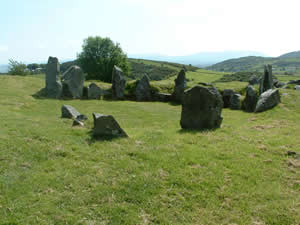
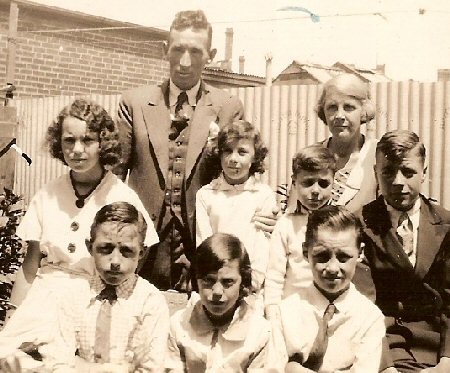
This Pillar Stone just to the north-west on the Slieve Gullion Ring Dyke is a menhir, – a tall, upright stone that once formed a tiny part of the Annaghcloughmullion cairn, an edifice in its time worthy of those at New Grange, Howth and Dowth in the Boyne Valley. The most recent Ice Age, which lasted in this region from c.30,000-12,000 years B.P. not only determined the topographical character up to the present, but eradicated almost all archaeological evidence of earlier habitation. Just at that moment the school bell rang, coming to my rescue! Although he was dead, I took up my wooden horse and tethered him to a nearby rail so that I could return to the classroom. Newry was late on the scene in establishing powered flax mills, exploiting the boom that inevitably followed the closure of American ports during their Civil War. I need not have worried. Turning the corner I was confronted by a newly constructed shop built from wattle and mud but this time it had a gleaming tin roof. Sitting becalmed like a sail boat on a mirrored lake with book-in-hand was my dear friend Rachel. The townland of Kilfeaghan forms a wedge shape, rising from the shoreline a few miles beyond Rostrevor up the slope of Cnoc Shee (Fairy Mountain) and facing the flank of Formal. These are the Southern or Low Mournes. It constitutes a slight curiosity only, now, I’m afraid, but fifty years ago and more, it played a fairly central role in many of our lives. Lou Morgan, who took fourth prize in our recent Reminiscence Competition for his series of anecdotes, first regaled me with an account of his progeny. There is an essential dichotomy in the essence of the GAA’s role in Irish society. Our photo depicts the family of John Martin (son of Thomas of Kiln Street who has featured here before) and Mary, nee McManus, daughter of the pawn-broker of In similar vein to the recently quoted sonnet, this one reflects on ‘remembrance of things past’ and indeed, people who have passed on. I particularly like the final couplet. The preceding lines remind me of many who, as they say, could ‘gern for Ireland!’ The much quoted Nicholas Bagenal 1509-1590 (the first of that line to come to Ireland) was born the son of John Bagnall, Mayor of Newcastle-under-Lyme, Staffordshire, England and Elinor, daughter of Thomas Whittingham of Middlewich, Cheshire, England. On this date in 1961 the Newry Reporter carried a story of a presentation to newly-created Bishop Carroll who was, the next month, to be consecrated Bishop of Monrovia (Annacloughmullion Cairn
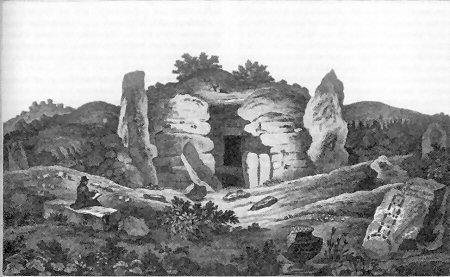
Archeology of the Carlingford Lough Region
Dick Shornoff
Buzzard Carrion!
Linen Industry in Newry
Rachel: 7 .. ended
Kilfeaghan
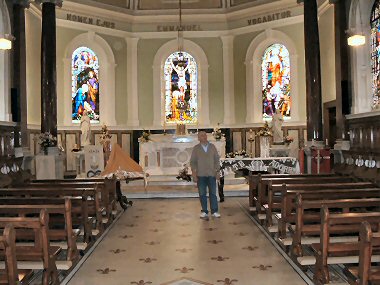
Confraternity
‘Do ye want the keg?’
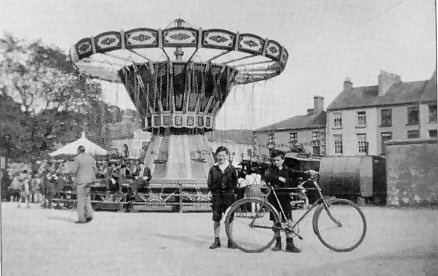
GAA’s divisive role

It is hardly necessary to explain this. No one can be in any doubt that in its successful quest of popularising and maintaining core values of Irish culture, the GAA has also been a participant in the process of cultural separation.Australian Martins
Sonnet XXX
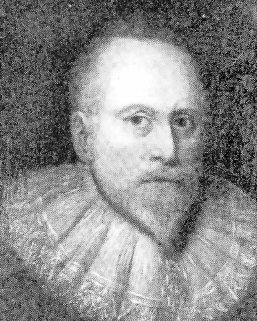
Nicholas Bagenal 1509-1590
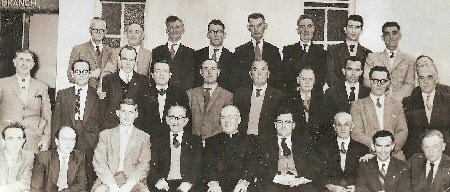
Bishop Carroll and Irish Labour
Should you be fortunate enough to come across the only remaining relic, a single Menir (Pillar Stone) in a field in Lislea, you will have little or no understanding of what has been lost!
‘People always gotta be poking things where they don’t belong!’ Dick Shornoff griped. ‘I just know he’s gonna sue. His excuse might be worth the hearing, though.’
Shornoff ran a Gift Shop complex in a holiday village high in the Appalachians. He explained that his entire complex was littered with memorabilia of the Old West, flintlock rifles, wooden-barrel washtubs, animal skins and even bear-traps. He had mounted one of the latter on a rest-room wall.