Railway Bar Characters

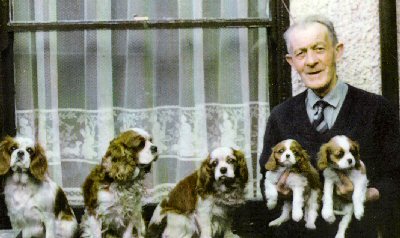
RamesAndDogs.jpg

Christmas Eve 2003 in the Railway Bar saw the unravelling of a story which had puzzled Wilbur Lundy from the Meadow from many a year earlier.

Myself and Liam Boyle were lucky enough to be present and witnessed the whole turning of events. Wilbur’s eldest son Billy was a keen dog lover and hunter [very much still is]. However the story dated back to the time when Bill was 11 years old – and was pieced together by the other two offspring of the Lundy household – Gerard and Robert plus information that Wilbur had unknowingly volunteered – what you are about to read, took years to unravel.

Read moreRailway Bar Characters

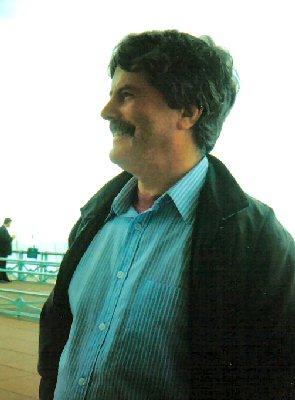
Poem for a Farmer

Vincie.jpg

This poem is written for Mrs. Margaret Dolan in memory of her late father, Thomas McCreesh (McGinnis) of Tullyogallaghan, Belleeks, Co. Armagh.  It is submitted by Rosemary Dolan of Guestbook.  Newry Journal is honoured to reproduce it here!
 
A great, a grand outstanding man,
Whose goal was ever high;
Who to whate’er he put his hand
Found not in vain the try.
He lab’red well and managed good
The land he did possess;
Few farmers of his neighborhood
Were more of a success.
 
His homestead, so well kept and neat,
Of care and taste spoke out;
It certainly was up-to-date,
None better thereabout.
At fair and market he was keen,
A master of retort;
But never from a spirit mean
Would he one’s feelings hurt.

His knowledge of livestock was wide,
No guesswork judge was he;
Time-tested methods were his guide,
And could not bettered be.
For miles around he was well known,
And held in high repute;
Upon this point there sure were none
Who’d venture to dispute.

By grand example and advice
He upheld honour’s way;
And pointed to the heavy price
Transgressors have to pay.
All those within his reach and care
Most ably did he lead;
Their erring ways he did not spare,
Nor aught to them concede.

To church and clergy always he
Full strictly did adhere;
He in them did Christ’s guidance see,
And felt his presence near.
Good hearted and responsive too,
He of times did befriend
Those neighbours who, he well, well knew
Life’s trial weights did bend.

The drawbacks of the times could not
His staunch persistence blight;
He still held on to goals he sought,
And kept an outlook bright.
Discipline with him carried weight,
He strongly did it stress;
The reason why, he’d tell you straight,
He knew its usefulness.

And so this man his whole life through
Improvements round him wrought;
His record fine accents the true,
The high aims to be sought.
He showed the faltering weak ones how
From struggle, strength to wrest;
How not to human frailty bow,
But live up to one’s best.

Street Rhymes 1

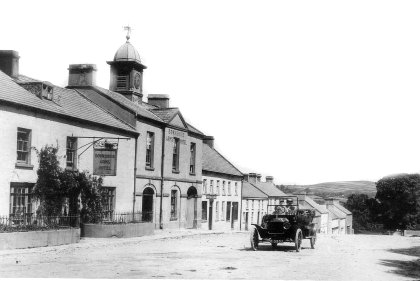
hilltown.jpg

Two snatches of old street rhymes keep running through my head.  I wonder if someone could put me out of my misery by completing them both.

‘Skinny melink,
Melojin legs,
Two banana feet…

And

‘.. he drank all the water
He ate all the soap
Last night he died
With a bubble in his throat.’

And the riposte when someone speculated on what might have been,

‘If ‘ifs and ands’

Were pots and pans

There’d be no call left for tinkers!’

I’d be grateful for any more you might remember too!

A Country Lane Walk

jungle.jpg

We have basked in summer temperatures for weeks, strolled the canal banks admiring the cherry blossom, and now the hawthorn is in full bloom.  Let’s share Carmel’s reminiscences!

‘Yesterday I walked an English lane.  The cloudless blue sky nestled contentedly atop the green hill.  The cows chewed the cud. The birds sang.  The hedgerows were blanketed in hawthorn – how I wish I could bottle that scent – and the poppies wore their best frocks and danced flamenco in the breeze.  Idyllic.  And yet, and yet………..how I wished I walked an Irish lane.

A Newry lane, byway, hill or field. The choice was endless in those far off days when I rambled with my Dad. Regardless of weather, Sunday was our walking day.  Come hail, rain, snow or sunshine, dressed appropriately, we’d set out.  Our “together” day, my hand in his and my young legs striving to match his purposeful strides.

The Bessbrook tramline was a favourite walk, with me attempting to jump from sleeper to sleeper while keeping eyes and ears alert for the sight or sound of an oncoming tram.

The Camlough road and the three blind fields.  Why were those fields known as blind fields?  As a child I accepted the name and didn’t question.  There we’d gather watercress from the brooks and streams and if feeling peckish, a snack of “bread and cheese” from the hedgerow would suffice.

The Fathom Line at the outset appeared endless but always there was the hope of sighting a boat or ship with cargoes of coal or oil or other essentials.  And of course we never walked the Fathom Line without an empty bottle!  As I recall, about half way along there was a barrel into which splashed spring water…….pure nectar…… and always so very welcome on a hot summer day.  Sometimes the promise of a drink from that spring was the only incentive my young legs needed to continue the walk.

The Warrenpoint road with its greyhound stadium and gypsy encampment and much further along, Narrow Water with its castle and bluebell wood.

The Rathfriland road with its ash grove and the hospital where I was born.’

So many walks!  So many miles!  So many happy memories!                                                                        

The Clink of Rhyme

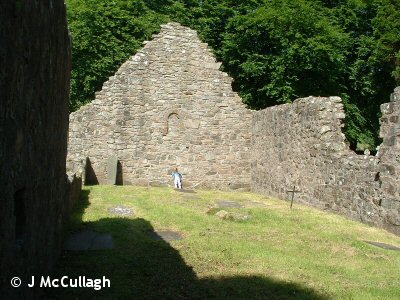
souterrain.jpg

A student here, from Ballintoy
A laughing fair-haired country boy
Felt now and then fit to employ
His Sunday leisure
In turning verses to enjoy
Poetic pleasure.

I showed him how with little cost
His thoughts were better far engrossed
In the blank verse of Robert Frost
And as a duck
Takes to the burn in which it’s tossed
He tried his luck.

The lines came supple, steady, clear
True to the country atmosphere.
There was no flowery discourse here
But honest phrasing;
And half a dozen times that year
He sought my praising.

But once he read his verses o’er
To some oul’ caillaigh at her door
Who had a name in three or four
Townlands for rhyming
That he might hear how much he’d score
By her skilled timing.

Awhile she listened to him, dumb
With not so much as haw or hum
Then, sucking at her toothless gum
She said, ‘I think
I’d rather hae the thochts that come
In lines that clink’.

By John Hewitt from ‘Loose Ends’ Blackstaff 1983.

I just LOVE this!  The wonderful Brother Barney Liston taught us a love of poetry some 57 years ago at the Abbey Grammar (long before Hewitt wrote this!).

The young are reared on simple rhymes (nursery, to begin with) and doggerel – or trite pop lyrics.  It takes time, tuition, practice and loving guidance to progress – in any enterprise.

I was initially dumb-founded that ‘prose’ – to me, i.e. non-rhyming poetry – could be counted in that exclusive company.

Hewitt, I suspect, is nodding in the direction of blank verse, but subliminally showing a personal preference for rhyme.  He is also extolling his own roots (in the Ulster-Scots tradition) and his admiration for those who champion that – and local poetry – doggerel, if you like.

The cailliagh here (I think of our own Alice Kelly of Rostrevor – apologies Alice – I know you have your own teeth, and physically do not fit the bill – but you are an inspiration for the youthful budding poets amidst us!) ) is counter-arguing with the tutor, Hewitt.  Like her, I prefer ‘lines that clink!’ 

I also like a laugh!  This poem never fails to bring a smile to my wrinkled old face!

Read moreThe Clink of Rhyme

Structure of the Universe

Killowen.jpg

Imagine standing on Warrenpoint beach looking towards Greenore.  You may dip your toe in the water but from this experience alone you must deduce – without travelling on or over the sea – the nature of water, and of sea-water, of seas and oceans and currents, their total volume and extent, their composition, what plants, animals and inanimate objects are found in the sea, and the nature of the sea-bed. 

Read moreStructure of the Universe

Francis Sheey-Skeffington

In 1913 there was a major strike in Dublin as James Larkin (whose family had come from Killeavy and Burren) tried to assert workers’ rights to be members of trade unions.  Strikers were attacked by police and they reacted by forming the Irish Citizens Army – intended merely to protect strikers from RIC attacks. 


It may have been somewhat na

During 1914 as the Irish Citizens Army became more overtly military, he resigned his position.

Despite this, Francis was to be brutally and summarily executed by the British less than two years later.  Skeffington was a journalist (his father was a doctor in Warrenpoint).  He was also a well-known champion of the poor and oppressed.   He was a tee-totaller, a vegetarian, a champion of womens’ rights, a socialist and above all, a committed pacifist.   James Joyce, the greatest Irish novelist of his time, complimented Skeffington as ‘the most intelligent person I met while studying at University College Dublin.’

On Tuesday evening April 25 1916 in the aftermath of Rising skirmishes, he went into the city to help the wounded of both sides and to dissuade people from looting.   Despite this he was arrested by the British at Portabello Bridge and used as a human shield by a British Army raiding party.   He witnessed the shooting dead of an unarmed youth by the raiding party commander Bowen-Colthurst.

Skeffington was held overnight and taken out the following morning, without trial or court-martial, and along with fellow journalists Thomas Dickons and Patrick McIntyre, shot dead against a wall.  In an attempt to find some justification for what he had done, Bowen-Colthurst himself led a raid of Skeffington’s home in a vain search for incriminating evidence against him.

The case became a cause celebr