Tack bad taste [tacky]
 John McCullagh
Chew the Fat
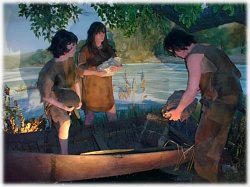
Thatched roofs were certainly warm in winter and cool in summer. These advantages were welcome to other creatures than man. The canopied bed came into existence to protect the sleeper from bugs and insects dropping from the thatch.
Gravity Hills
Mountains present a different profile to the observer from each separate location. It is useful therefore if the tourist provider at popular Viewpoints gives such information in graphic form on an accessible plinth.
Not Lost after All!
The Royal Hotel, Ventor,
Nothing unusual in that you say. Only that the card sent to make the request was posted some ninety six years ago. The half penny stamp bore the image of King Edward VII who died in 1910.
Asked to comment a Post Office spokesman remarked,
‘This only proves that eventually – like our great forebears of Wells Fargo – the Post Office delivers triumphantly.
Indeed this is so long ago, I wouldn’t be surprised if Wells Fargo didn’t have a hand in it!
Really, the Royal Hotel ought to be surcharged because the face value of the stamp does not cover the current postage charge. But in the circumstances, we are prepared to be magnanimous and overlook the surcharge.’
Perhaps the postman who delivered it ought to be grateful that he didn’t suffer the fate common to today’s bearers of bad news: i.e. ‘shoot the messenger!’
But then again, Piers Moran is supposedly seeking a
The 20 Houses: Dromalane
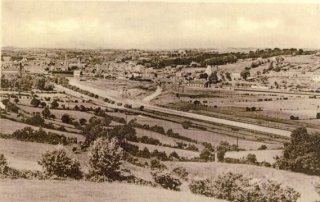
The dreadful overcrowded town house conditions immediately after the war [mostly ‘entries’ with many families sharing a single tiny house] is clearly testified to by the list of tenants allocated the first twenty houses of Dromalane Park in 1950.
To this day these are known as ‘The Twenty Houses’ and the family heads, with the number of people in each family were:
Peter McVerry
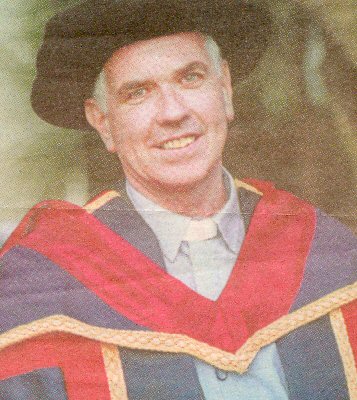
The son of the late Dr John McVerry and his wife Eleanor, Peter McVerry was educated at the Abbey primary School and then at Clongowes Wood College. On leaving school he joined the Jesuit Order, secured a science degree at University College Dublin and taught for some years.
He then studied philosophy and theology in the Jesuits’ own school and after his ordination as a priest in 1975 he lived and worked in Summerhill in Dublin’s north inner city. The move to Summerhill was to prove a watershed event. He was galvanised into action to attempt to alleviate the deprivation and disadvantage he witnessed. In 1979 he opened a hostel for young homeless boys aged 12-16 and four years later founded the Arrupe Society to provide care and accommodation for homeless boys. Since then he has opened another three hostels for the homeless and a residential drug detox centre in Co Dublin for homeless drug users.
When he was conferred with an honorary doctorate of philosophy by Dublin City University recently, the President of DCU in his citation said,
‘Few people live to see their name become synonymous with a cause. Peter McVerry is one. For over a quarter of a century he has been a public champion of the young homeless. His is a passionate and tenacious voice for those who lack the clout, the confidence and the means to expose the scandal of young people sleeping rough on the streets of one of Europe’s most thriving capitals.
His ministry focuses on taking care of those whom society would rather forget. He is a vocal conscience prepared to challenge governments, public agencies and an increasingly affluent Irish population.’
Newry Journal is happy to pay tribute to this great man.
In passing we would also like to acknowledge the contribution in a similar field of Newry migrants of past decades such as Sam and Brendan Dowling and especially of Dan Moore. When your editor was in his early youth, he used to marvel at the commitment of this old-time Republican who was prepared to sacrifice several months of his life per year in doing time for the ‘crime’ of carrying the tricolour in the Colour Party of the annual Easter Rising Commemoration in Newry. Few have given a lifetime of service such as Dan – now well into his sixties – continues to do, for to this day he labours all week on behalf of Dublin’s drug addicts.
There must be other Newry greats in the same vein. We would like to pay tribute to them, so please get in contact with us and tell us their stories.
Bishop John McAreavey
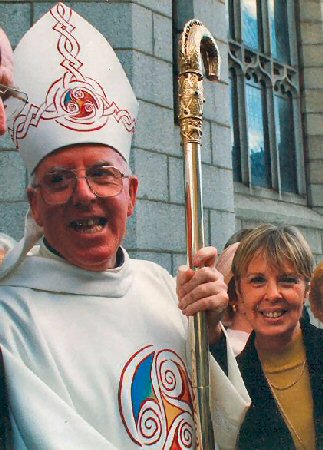
John McAreavey was born at Drumnagally, Banbridge on 2 February 1949. He is the son of Mary and the late John McAreavey and has two sisters and two brothers. He received his primary education at Ballyvarley School and then the Abbey Primary School, Newry. He received his secondary education at St Colman’s College, Newry. In September 1966 John entered St Patrick’s College, Maynooth where in 1969 he finished a degree in modern languages and in 1972 a degree in Divinity.
John was ordained as priest for the diocese of Dromore by the late Bishop Eugene O’Doherty on 10 June 1973. Fr McAreavey returned to Maynooth after his ordination and completed a licentiate in Theology in 1974. He was a post-graduate student of Canon Law at the Gregorian University of Rome from 1974-1978 when he graduated with a doctorate in Canon Law.
From 1978-1979 Fr McAreavey was on the teaching staff of St Colman’s College Newry. In the latter year he was appointed to the Armagh Regional Marriage Tribunal. He became head on the death of Fr Mulvenna in 1983 and held this post until 1991. Meanwhile he had been appointed in 1988 Professor of Canon Law in the Pontifical University of Maynooth. While there he wrote widely on Church Law, publishing in 1997 The Canon Law of Marriage and the Family. He had served on the Editorial Board of the Irish Theological Quarterly from 1998. He is also a member of the Canon Law Society of Great Britain and Ireland, and the Canon Law Society of America. Since 1994 he has been secretary of the Greenhills Ecumenical Conference Committee.
Throughout his entire ministry John has been involved in the pastoral care of engaged and married couples. A fluent Gaelic speaker [indeed a polyglot] he is a member of the committee of Col
Phrases and Explanations
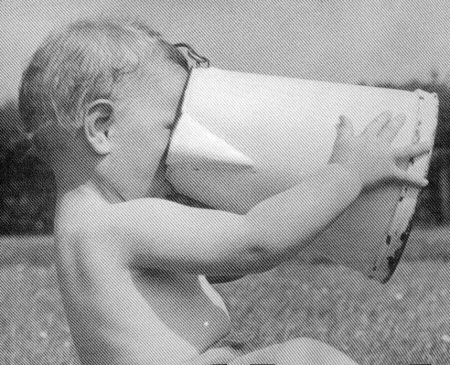
The origin of a few common expressions explained: ‘Don’t throw out the baby with the bath water!’
Dromalane
Myrtle Coghlan’s task on the day her family moved to Dromalane Park was to carry an armchair as big as herself.
This was not unusual as families had very few possessions and neither needed nor could afford to hire private transport. Hand carts were in great demand for a few weeks. With the baby removed, prams were an excellent carriage vehicle for numerous small items.