Fews Glossary: S 1

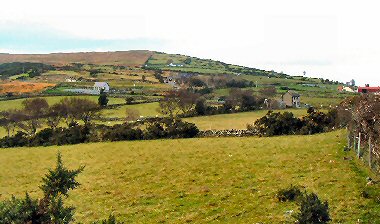
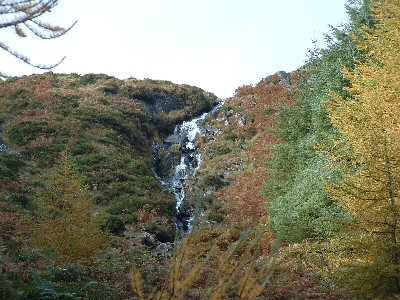
OutOfTheMountains.jpg
Dialect ‘S’ 1 of 7
 
Sack            dismiss, also bags of all sizes
Saggans       tall reeds or plants growing in water
Sally            willow, a sally rod once used for corporal punishment
Salted          ‘well salted’, paid above the going rate
Say              ‘he has no say in his house’
                   agree, ‘Say with her! It saves trouble.’
Scad            little, short
Scaldsome   troublesome
Scollops       rods sharpened at both ends, then doubled and driven into the scraws in thatching
Scope          scoup, hollow out or excavate
Score           scratch, ‘score her eyes out’
Scrab           scratch, ‘Mary scrabbed me, ma’
Scranch       crunch or crush
Scrant          ‘bad scrant till ye for yer cheek!’, begone!  Ill luck to you
Scrapers      feet, ‘wipe yer scrapers before you come in’
Scraws        sods
Screed         a story
Scringe        creak, borrow
Scroggy       waste land of bracken or briars
Scrub           mean: also occasionally affectionate term, ‘a taking wee scrub that’, a fine child
Scruff           back of the neck
Scrunt          useless, small
Scuffed        shabby
Scum           to skim, ‘scum the milk’
Scunder       dislike
Scundered    devastated, ‘I was scundered when it happened’
Events in Newry’s History

SIGNIFICANT EVENTS IN HISTORY OF NEWRY


1819        St Mary’s Parish Church (COI) opened.


1823        Gas lighting comes to town:  to Ballybot in 1834.


1825        Foundation stone laid of Catholic cathedral.


1828        Cathedral opened.


In Parliament, Counsellor O’Hanlon’s son Hugh sponsored a bill for “the better lighting, watching, cleansing and   paving of the town of Newry” which became the model for all of Britain and Ireland.


1829        Newry Fever Hospital opened (sited where Intertrade is today, on

Kilmorey Street

)


Catholic Emancipation Act passed at Westminster


Control of Canal goes to Newry Navigation Company.


1830        Order of Poor Clares opens a convent in Newry.


1831        Patrick Jennings of Newry becomes P.M. of Victoria


1833        Cholera in Newry: 271 people affected; 127 die

                Charles Russell (Lord Killowen) born in

Dominic St

.


1835       Bank of Ireland, Trevor Hill was built.  Still worth seeing.


1838       Newry General Hospital on Rathfriland Hill opened.


               Daniel O’Connell visits Newry.


1841        Newry Workhouse opened.


1842        Celebrated novelist and traveller William Thackeray visited and praised Newry in print.


1843          Courthouse at Trevor Hill built.


1846           Old bridge at Ballybot (the bridge of Newry) replaced by granite structure.


1847           Poor Law duty (to make ratepayers responsible for local poor – i.e. Workhouse inmates) established.


1849           Newry-Warrenpoint railway opened.


1845-9        Great Famine decimated Ireland‘s population.  Workhouse full beyond capacity (1000).

                                          Great hunger, disease and loss of life throughout wider district and rest of Ireland. 

                                          Accelerated emigration from Newry and Warrenpoint ports.


1851         Christian Brothers came to Newry


1854         Towns Improvement (Ireland) Act in force


1855        Kerrs Mill / Sands’ Clanrye Mills erected


1865        Towns Improvement (Ireland) Act applied to Newry


                Newry-Greenore railway link opened


                Christian Brothers’ Carstands School opened


1870        Dominican Fathers come to Newry


1871       Newry Water Act for improvement of town’s supply


               Newry’s population reaches 14,158


1875        John Mitchel (and  John Martin)  dies.


Read moreEvents in Newry’s History

S**t upon from a height!

BBotHouse.jpg

Our teenspeak of old, in reference to some calamity that had befallen a friend or foe, was that he had been

“s**t upon from astronomical heights.”

The story brought this to mind.

“If there’s anyone who knows what s**t is then surely it’s me,” said plumber Murray Norris.

“I came home on Friday evening,” he told reporters, “to find this evil-smelling brown muck splattered all over my roof and wall. I immediately guessed that it came from an aircraft toilet so I complained to the Civil Aviation Authority. They blamed the mess on a bird, yet some of the patches are three metres across.

If that’s a bird it must be the largest one on the planet with a serious diarrhoea problem. My neighbours’ homes were covered too.”

Bill Sommer of Wellington, New Zealand’s Civil Aviation Authority charitably conceded,

“It might have been several birds acting in unison!”

Guy Dansie of the Public Health Department commented,

“It’s almost impossible to tell where it’s coming from but it’s falling from the sky.

There’s only one major source of human faeces up there, isn’t there?

“Unless Jack’s Beanstalk giant is still up there with a serious bowel problem,” he added.

Facetiously, I thought.