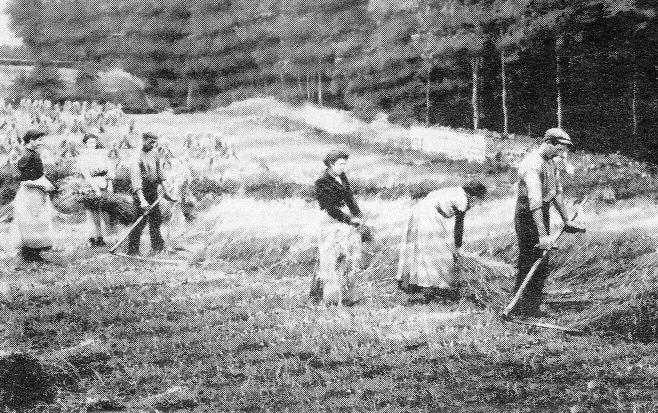
Frequent food parcels from American relations during World War II provided relief from the drudgery and shortages. I well remember the excitement of their arrival and the ritual of opening them. For me, apart from the food – spam, dried eggs, candy and chocolate, canned fruit etc, the most exciting part of the whole process was the comics.
Reminiscence
Towpath: Snipe
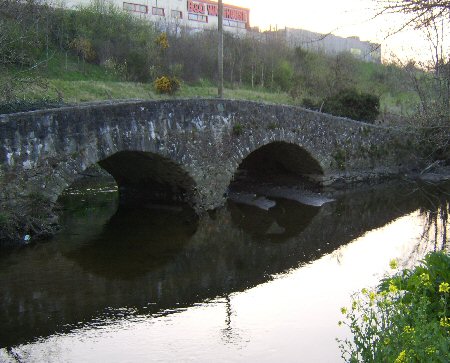
Again as with most of the lockkeeper cottages along the canal there were always the usual hens running around. I remember – when I was a young lad of about thirteen – Patsy Crawley who owned the grocery shop in Canal Street, paid me two shillings to take his big Labrador dog for a walk.
Arthur St/Aileen Terrace 1906
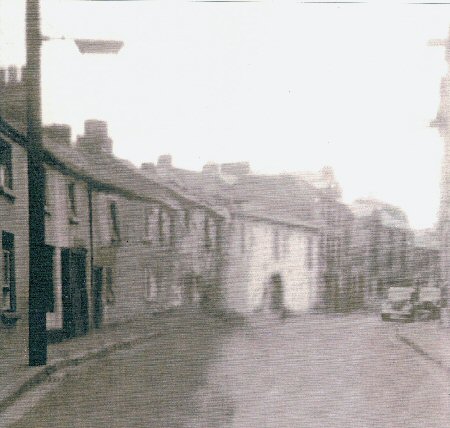
Few of our streets have remained substantially unaltered over the last century – but those featured below from the Newry Street Directory of 1906 are among them.
Ghosts
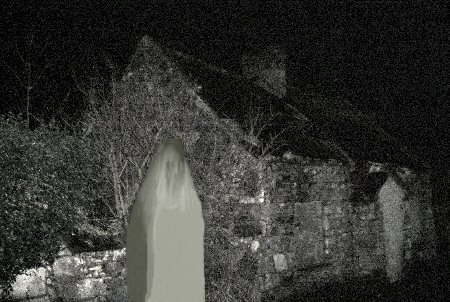
After the usual round of gossip and comments on the weather and the horse-racing, people on their ceilidhe in the old days invariably lapsed into stories about banshees, pookas, fairies and ghosts.
Drumbally: Ceilidh House
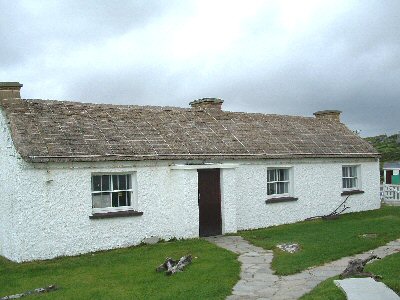
The houses about Drumbally were scattered – I doubt if there were more than a dozen in a radius of a mile – and there wasn’t much by way of entertainment available. What there was, was talk.
Drumbally: neighbours
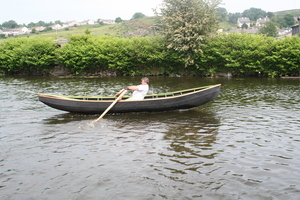
The river bounded the other side of the field where our house was located at Drumbally. It was about 20 feet across and about five feet deep between steep sides six feet above the level of the water. Two sturdy planks spanned the gap. The whole was about a yard wide with no side rails or rope support.
Crossmaglen, 1930s
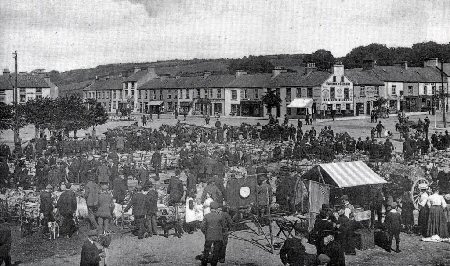
Crossmaglen, or Cross as it is better known in the area, was the largest village in that part of the County. Its principal feature was its large square, reputedly the largest in
Actually, Warrenpoint – but you get the picture!
There was the chapel, school, police barracks, picture house, dance hall and football pitch. The village was not electrified until the 1950’s although the cinema had a generator.
Drumbally, comprising 265 acres, lies two miles from Crossmaglen and three miles from the borders with Co. Louth and Co. Monaghan. Drumbally lies on a large drumlin and from the top on a clear day, flat countryside stretches south for many miles into Co Louth. In common with most of the rest of the country, the townland suffered a decline in population during and after the Great Famine 1845 – 1848. From Census returns we know that from 144 people in 75 dwellings in 1841, the population steadily declined, by 1951, to 37 people in 14 dwellings – a 74% reduction.
At the time of the 1901 Census (the first one for which complete documentation survives) 11 of the 17 households contained at least one native Irish speaker – 13 in all. The average age of the group was 61; eldest 80, youngest 40. Drumbally had a significantly higher proportion of Irish speakers than the (civil) parish as a whole where 785 of 5249 (15%) spoke the language. When I arrived, 37 years later, most, if not all of this group would have passed on, taking with them a whole tradition.
The house where I was born and lived in until 1952, was a slated single storey, two-roomed cottage 50 yards down a sunken lane at the foot of Drumbally hill. It belonged to “James Pat” McShane who had emigrated. The rent was 1s 6d a week. There was a shed, a “street” (a clear area, or yard, in front of the house) and two “gardens”, one of which my father planted out in potatoes and vegetables each year.
When it rained, the water rushing down the lane in a torrent was an endless source of joy to me in setting up dams, making diversionary channels and generally getting wet through. I never remember the water as cold – it always seemed warm and fresh, with a feeling of newness, and promise, as it first rushed, and then trickled, over the stones. In the hard winter of 1947 the lane filled with snow and my father spent a whole day digging up to the road.
… more later …
For those of you who tire of my drip-feed methods (the Newry Journal style from the beginning) – you may read Pat’s memoirs complete here
… History: Town of Crossmaglen? …
Drumbally, 1938
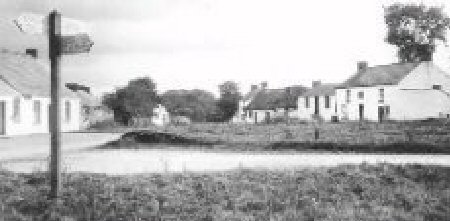
November 22nd of 1938 dawned cold and foggy with a ground frost and light to moderate northwest winds. There were cloudy periods with occasional showers and some sleet on the high ground.
Fosters Finale
It isn’t easy to believe that Peter still could not allow things to settle before chancing his arm again. He determined to return the very next Thursday.