Fews Glossary: R 1

HlSt50s.jpg
Dialect ‘R’ 1
 
Rabble         to talk foolishly
Rake            quantity, ‘a rake of butter’, ‘a rake of flax-land’
Rampage     to stamp noisily, to make a disturbance
Ram-stan     rash, headlong
Rammel-tree         beam in byre to which cow-stakes are fastened
Ramp           to stamp in anger or rage
Rap              rascal: also, rapscallion
Rasps          raspberries
Rattle-skull   silly person who talks without thinking
Ready          make ready, prepare, ‘ready the horses for the plough’
Reason        talk
Red              clear, tidy up. ‘red the way for the cart’, ‘all red up’, red your hair, girl!’
Reel             joke
Reek            smell strongly
Reeve          splitting, ‘a reeving pain in my head’
Rench          rinse, ‘rench up the dishes, there’s a good girl!’  (Mum was always annoyed when I took this literally: i.e. failed also to dry and return them to their respective cupboards.  Like when I was asked to ‘give the chile’s face a lick!’  Well, that’s what she asked me to do, isn’t it?)
Rib               as thin as a, ‘just a stack of ribs, that girl’
Resate         receipt
Ribbely         rebellious
Rig               ridge
Rickle           a heap, ‘a rickle of turf’, ‘a rickle of bones’
Rift              drift. ‘we rifted apart of recent’
Riff-raff        people of low moral standing
Saint Moninna

Saint Moninna in Louth
It is often claimed that Saint Moninna was a sister of our patron saint Patrick. 
 
It is unlikely. Perhaps the confusion rises from the common given name Darerca, since Patrick is  also said to have had a sister of that name.
 
In his Confessio Patrick speaks of the number of converts made by him and his followers on their travels; he says  that he does not know the number who ‘are born of our kind and generation’ .

Saint Moninna in Louth

Read moreSaint Moninna

Ships Lists: Buchanan 1765

dubbge001.jpg

The eighteenth century saw some of the earliest emigration from Ireland to the new American colonies.  Here in Ireland this century saw the greatest confiscation of land from the majority Catholics and its re-allocation to Protestants. 


The penal laws remained very much in force and the future looked anything but bright for Catholics or Dissenters [Presbyterians, mainly].  There was a greater fraction of the latter which looked to the new Colonies and indeed for the next eighty years they constituted the larger part of Irish emigrants. 

Read moreShips Lists: Buchanan 1765

1952 Newry from the Air (A)

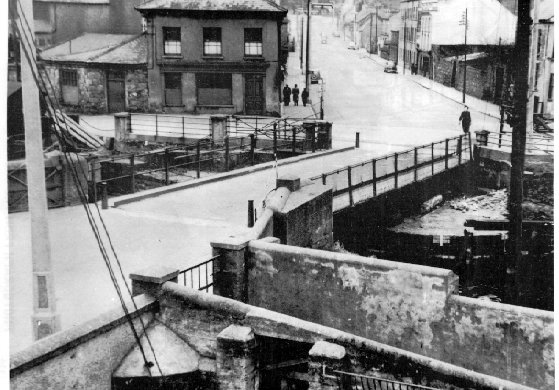
These photos show the River/Kilmorey/Boat St area:  Albert Basin with Lock-keeper’s Cottage: Belfast Rd/Ardmore area: Balmoral/Upper Damolly Rd area: Bridge St/Quays/Ballybot area: and the Belfast Road leaving Newry.  Perhaps most remarkable is how little has changed of the centre; and how much in the suburbs!