After the war things got very bad. There was no work and less money so eventually Tom Burns and I decided to go to
Jerretspass: concluded
Newry News and Irish Fun
 John McCullagh
After the war things got very bad. There was no work and less money so eventually Tom Burns and I decided to go to
Peace broke out in 1994
Then the semantic battles
Began, highly explosive verbs
And nouns were fired
Without warning by all sides,
Sending newspaper editors
Diving to the floor.
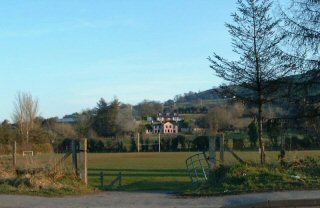
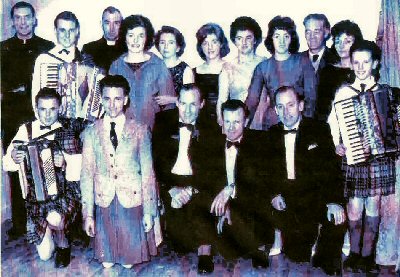
Another photo (sorry about the quality – I was promised better!) from our upside-down friend in the Antipodes!
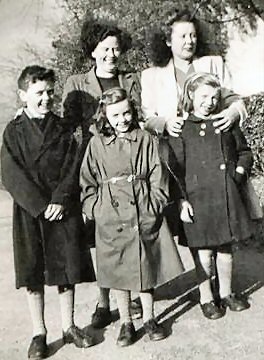
At the age of fourteen and the eldest of five children I was excited at starting my first job in Dromalane Mill.
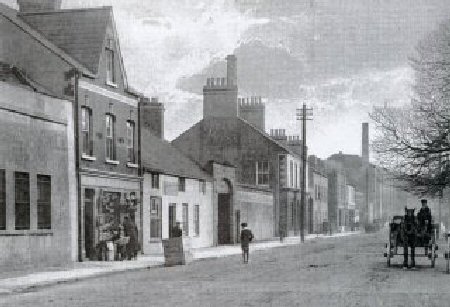
There is a plaque on the North Street Block nearest High Street celebrating the life of one Seamus Mac Conmara (McNamara) who was born near there (7 North Street) at the beginning of the twentieth century.
Seamus was first and foremost a surgeon. He graduated from Queens University Belfast in 1931. He wrote in Irish (one of the very few of the twentieth century so to do) a number of successful novels, notably ‘The Stranger’. He suffered from ill health and died in 1936 at the age of twenty seven years.
His father, a sergeant in the RIC, owned two businesses in North Street, a tobacconists and a draper’s shop. Seamus is the son of this James by his second wife Johanna (nee Lacey). There was also a daughter from this marriage who married into the Murtaghs of Kilmorey Street.
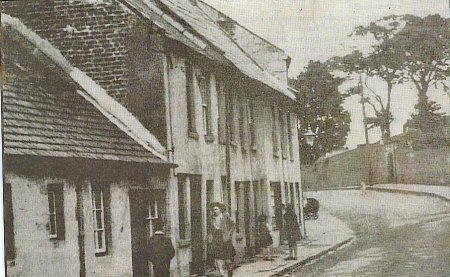
Streets of Yesteryear
1 Michael Turley
3 John McGivern
7 Edward Markey
9 Michael Warner
13 Vincent Murney
6 Joseph Manley
8 Rose O’Donnell
Market Street
3 Louis Spencer
5 Catherine Lundy
2 Edward Convery, Shoes
4 Margaret Hughes
6 Peter Hughes
8 Joseph Hughes
16 Edward Donnelly
18 Bridget Mallon
26 Anthony Fitzpatrick
28 Bernard O’Callaghan, Grocer
Chapel Entry
37 Mary Graham
39 Mary Gallagher
36 Thomas Donnelly
38 Josephine Morgan
20 James Patterson
24 James Patterson
24 Fred McEvoy
26 Elizabeth Mooney
34 Mary Morgan
36 Alex McKinley
48 Mary Fearon
44 Margaret Henry
46 Susan Connor
1 Patrick Fegan
3 Robert Fitzpatrick
5 Rose McKenna
7 Josephine O’Hanlon
2 Thomas McKevitt
6 Margaret Morgan
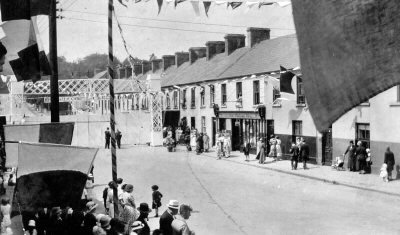
RESIDENTS OF
– 1901
|
Use Family Name family |
|
|
|
1 Pub Yes Annie McConville 12 |
|
2 Printing Office |
|
3 Pub |
|
4 Shop |
|
5 Pub Yes John Savage 3 |
|
6 Shop |
|
7 Shop Yes James Gordon 7 |
|
8 Rectifying Distillery |
|
9 Customs Bonded Store |
|
10 Private House Yes John Thompson 7 |
|
11 Private House Yes James Mark 3 |
|
12 Private House Yes Mary Magennis 6 |
|
13 Pub Yes Joseph O’Kean 7 |
|
14 Private House Yes Mary McKevit 7 |
|
15 Shop Yes Agnes Gilow 3 |
|
16 Private House Yes Catherine Egan 4 |
|
17 Private House Yes William Bell 5 |
|
18 Private House Yes Alex Mahood 6 |
|
19 Manufactory |
|
20 Private House Yes Charles Pollock 2 |
|
Yes Margaret Donnelly 5 |
|
21 Private House Yes Minnie Buchanan 2 |
|
22 Shop Yes Peter Feehan 10 |
|
23 Private house Yes William Lee 3 |
|
24 Private House Yes Edward Crilly 3 |
|
Yes Michael McCoy 2 |
|
25 Private House Yes Thomas Gallogly 2 |
|
26 Shop Yes William Barron 2 |
|
27 Pub Yes Ino McKnight 6 |
|
28 Private House Yes Wilfred Squire 4 |
|
29 Private House Yes James McMahon 3 |
|
30 Private House Yes Hugh McKay 4 |
|
31 Private House Yes John Loughran 5 |
|
32 Private House Yes Sam McCauley 8 |
|
33 Private House Yes John Kavanagh 7 |
|
34 Private House Yes Ino Treanor 6 |
|
35 Private House Yes Hugh Flanagan 2 |
RESIDENTS OF
– 1901
|
No. Use Family? Name family |
|
|
|
36 Private House Yes Mary Farrell 4 |
|
37 Private House Yes Owen Kelly 3 |
|
38 Private House Yes Mary McCloskey 3 |
|
39 Shop Yes Robert Robinson 4 |
|
40 Private House Yes John Power 9 |
|
41 Private House Yes Margaret Gorman 2 |
|
42 Private House Yes Peter Campbell 5 |
|
43 Private House Yes Anne O’Neill 4 |
|
44 Private House Yes Michael McCoy 3 |
|
45 Private House Unoccupied |
|
46 Private House Yes Patrick Sharkey 4 |
|
47 Private House Yes John Calderwell 1 |
|
48 Private House Yes John Fields 6 |
|
49 Private House Yes Patrick Hunter 10 |
|
50 Private House Yes James Mulgrew 3 |
|
51 Private House Yes Joseph Sinclair 5 |
|
52 Private House Yes Essie Black 11 |
|
53 Rectifying Distillery |
|
54 Customs Bonding Store |
|
55 Pub Yes Walter Savage 7 |
|
56 Private House Yes Eliza Bell 4 |
|
57 Private House Yes Mary O’Callaghan 5 |
|
58 Shop |
|
59 Shop |
|
60 Shop |
|
61 Pub Yes Michael McArdle 4 |
|
62 Private House Yes Michael McCoy 5 |
|
|
(No further records ..)
Marie grew up at 45 Monaghan Street, next door to Garvey’s Eating House. She remembers number 43 was always packed on Mondays (fair days) and Thursdays (market days).
She herself was the only girl of her family. She had five brothers, including the late Adrian (Aidan), husband of Brenda of The Gardens, Bessbrook: Pat, who sharpened saws and knives (Stephen Downey remembers he sharpened his butcher’s knives and saws); Pat married and lived in Orior Road with his children Raymond, Joyce and Emily: Kevin, who settled in Australia [his wife died in Australia in August 1994] and their son, Eamon: and Seamus. The fifth brother Eamon married in the USA and reared a family of six children. Their parents John and Emma D’Arcy were married in 1921. Emma’s father (and Marie’s grandfather) was called Kavanagh and was also from Monaghan Street.
Marie used to collect “skins” door-to-door for Mrs Garvey, to help feed the pigs she kept for bacon etc. for her eating house. She recalls carrying two buckets full of these slops down the length of Monaghan Street to feed these pigs. Sonny McCullagh, her next door neighbour, would often help her. The buckets didn’t half pong. In those times (and long after too) people used to rear pigs in their back garden for a source of income. Garvey’s pigs were kept in a shed on waste land behind Hollywood’s garage at the top end of Monaghan Street. Many people remember witnessing the (public) slaughter of these animals when the investment had to be realized. Apparently the squeals of the pigs when they realized their imminent fate were indeed harrowing! The “skins” collected consisted of household vegetable matter (potato skins, carrot, cabbage leaves, dinner plate scrapings etc.) which householders separated and stored for the purpose. Contrary to regulations, some residents in the new housing estates of the 60s kept a pig in the back garden and fed it thus. As teenagers we used to scoff our friends by publicly and loudly demanding that they call soon to collect the “skins” which were rotting and smelling in storage. It was a ruse if repeated when your pal was chatting up a girl, was guaranteed to turn her off him! Marie recalls the residents of Monaghan Street then, as follows.
MONAGHAN STREET, NEWRY IN THE 1940’s
The D’Arcys lived in number 45 Monaghan Street (odd numbers only on that side of the street) but Marie’s folks had lived earlier further along, at number 57, where Hugh McKenna until recent years has his off-licence (The Cork and Bottle). Marie was born there!
Number 41 (beside the railway line and in front of Willis’) was owned by a Mrs Collins. Her husband was a sea-captain and wasn’t often there. Although they owned the first four houses of that block (the others paid rent to them) they did not own a radio. Marie remembers during the war, when news was eagerly sought, Bridget Garvey, next door, would turn up the radio in her front room. All the neighbours would sit on the windowsill outside and listen attentively. These four houses were later sold to Frank Murphy of Pound Road.
At 47 lived Charlie Rodgers. He was married to Cissie and they had children Phyllis and Joe. Charlie was a brother of Petie, who like him grew up across the road, next door to Gorman’s, the hairdressers. Petie, until his recent death, resided in Kiln Street. Number 49 was originally used as a store for the shop at 55 (see below). At 51 was the office of Willis’ bakery. Although it was not a shop, Marie remembers getting delicious fresh buns there. At 53 lived the bakery manager. He was able to get to work through his back-yard.
Number 55 was a shop, a general store. It was called Robinsons. Marie remembers a clutter of jars etc. on the stone floor. The family was Plymouth Brethren. Meetings were held in a store that was located between McMahons and the shop. Later Tommy and Belle (Isabel) Crawley took this shop and lived at the back of it. Their children were Mary, Noreen, Pauline, Kathleen, Thomas, Pat and Benny (who once had the shop in Stream Street.) Pat is bursar of Abbey Grammar School, Courtenay Hill.
As mentioned number 57 was Kavanaghs, Marie’s people’s house. Marie’s mother’s cousin Paddy Kavanagh lived there then. His children were Tony, Carmel, Joseph and Arthur. Later they would live at Ballinlare Gardens, in Killeavey Road, the Meadow. They were relatives of Joe of Derrybeg Drive. Marie’s mother Emma had died in 1932 of tuberculosis. Like the word cancer today, many people then would not speak the disease’s name, for it carried away so many of the poor. John (Marie’s father) remembered that some people would not even enter the house where she had died of it. There were just two bedrooms. Overcrowding and poor diet/conditions contributed to the spread of the disease. Today T.B. is making a big comeback. There are 300 new cases per year in Ireland. Now there are over 4 million sufferers worldwide. It is especially rampant in developing countries where there is little availability of the antibiotics used to counter it.
At 59 lived the McConaghy’s. Today their grandson Declan works for BBC’s Radio Ulster.
At 61 lived the McCormacks. Charlie worked in McCanns. Children of this family included Philomena who would later marry John Duffy. Phyl died a few years ago and is sorely missed by her loving husband and family.
Other McCormacks were Kathleen and Billy. Billy was a staunch trade union man. He became involved in the labour split of the forties in Newry that centred on the Queen Street Union Hall. Jimmy Kavanagh (Mollie’s brother) was on the same side with him. Tom Kelly was on the opposing side.
At 63 lived Mr and Mrs McGuigan. Eileen McGuigan was their grand daughter but was reared as a daughter. Her mother was Rose. She went to the United States and married a man named Murphy. Rose was a real good-looker. She worked in Moloccas ice-cream parlour in Warrenpoint. Josie Rafferty, Marie tells me, was from John Martin Gardens. She was related to Dr (Ronald) Rafferty.
Maurice Rowe (Marie’s husband) remembers about Garvey’s eating house, that you would always get a good hearty meal there. He recalls the men from Crossmaglen and from Mullaghbawn, who would sit outside, on the windowsill, eating their meal. There’d be two rough tables there for them. The atmosphere was totally friendly and relaxed.
At 65 lived Mickey Flanagan and his wife. They had no family. He was a brother of Mrs McGuigan who lived next door.
Other residents of the street included the Treanors, at 67. They were three sisters, one a dressmaker, Minnie from Dundalk. At 69 lived the Mulhollands. Johnny Mulholland’s daughter Marie lives in Loughview Park and Pearse and Oderin are well known. Johnny’s father worked on the railway. His other children included Jimmy, Lily and Chrissie. He and his wife also reared Dessie Kavanagh, who was a nephew of old Mulholland’s wife.
Number 71 (today Pat Duffy’s shoe shop) was an empty shop belonging to a Flanagan who lived further up the street. In the blackberry season it was used for collecting and processing the fruit, as Gavagans of Francis Street would be in a later generation. Upstairs here lived a Belfast evacuee, one Jackie Hearst, an old and well-loved character about Newry who was one of the most accomplished accordion players ever heard. He achieved some little fame, playing in several bands, including one bearing his name but never achieved the recognition he deserved. With him lived his mother, his sister Evelyn and his niece Agnes Storey. She later married Brendan Macken of O’Neill Avenue, father of the late Paul who used to participate in quizzes.
At 73 lived Bridie and Peader O’Hare and their children David, Pierce and Jeffery. At 75 lived a very short man named Mackin who worked with enormous shire horses for McCanns. He had two daughters Mary and Rosie. At 79 lived Mr and Mrs McCourt (even shorter!) who were a quiet and unassuming couple with no family. Next door at 77 were the Gouldings with their children Pat and Brian.
Number 83 housed the Gunns who owned a pub there. The man’s wife was a district nurse. Later they lived in the Glen. Philip, their son, married and emigrated to Brazil. On the other side of the street, beside Gormans (36) and Rodgers (38) lived the Bradys (40). They were cattle dealers. There were three sons Jim, Harry and Pat. There were also three daughters, Nellie, Mollie and Dora. Much later Jim Brady with his wife and family lived in the Meadow. At 42 were the Hillens, who were grocers (where Rices is today). Mary and Pat McParland lived at 44. He worked in O’Hagans. Mr McParland, retired vice-principal of St Paul’s School Bessbrook grew up here. At 46 lived the Dohertys. There were four sisters. One was a friend of Dolly Garvey. Her name was Bridget . There was also one brother.
At 48 was the McAteers. Peter was a taxi driver, his wife a dressmaker. They came to live here in the late 1950’s. They were not overfriendly. Their children Rita and Peter were twins. He was ginger haired. He worked in the gas-works.
There was a garage at number 50. It was often used as a coal store. During the war German prisoners of war were kept there and made to work, guarded by British soldiers. Amongst other things they fashioned children’s toys from wood.
Beyond this was Barney Hughes’ pub, favourite watering hole of the men of the area, and now Gerard McGuigans. Marie also referred to one Frank Quinn (known as Pipe) who worked as a foreman in McGowans printers. He was a stylish man who dressed well. He died in his eighties in 1995.