Psychotic or Psychic?

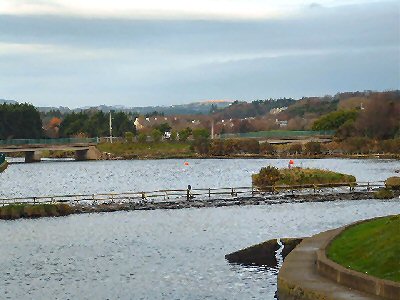
BoatingPond.jpg

Carol Schultz is a pet psychic. Consultation costs $50. She cannot communicate with fish or birds but can with cats, dogs and horses, even if they are dead.

“My gift enables me to hear and understand what they are saying and even to talk back with them. I have treated a dog that suffered from anxiety because it was separated from its owner. It was fine when I handed it back.

Another dog was Hitler in a past life and was severely traumatised. I have also helped a dyslexic three-legged cat who was feeling guilty because it left its ‘treasures’ in its owner’s letter box instead of its litter box. I have also counselled a dog that was trapped in a cat’s body. A real bitch, that one, but I cured it.”

Miss Schultz is currently resident at a psychiatric unit but will be available at her own clinic as soon as she is released.

War Memories

fromoldcomputer1-131.jpg

A Newry friend recently received the following e-mail from an American soldier who was temporarily billeted here in the War.

“I was in the US military. My stay in Newry was from December 1943 to January 1944. Our barrack was a large two-story building next to the local Creamery. Your grandmother, then a girl in her early twenties living in her mother-in-law’s home which was also a restaurant just across the street from us, must often have served us meals.

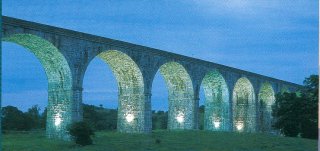
I still wonder at the beauty of your countryside. Newry was an inland port. Before I was aware of this I had a scary experience. This was of ships sailing majestically across lush meadows. From a distance I could not see the waterway which carried these craft.

We became acquainted with some small children of 8-10 years of age. I don’t know if they were your forebears. Anyway we were told that if we could supply the sugar, their older sister would bake an apple pie for us. That evening eight of us spread ourselves around different tables in the mess hall. We emptied the sugar bowls into a container to hand. The sugar was delivered and the following day a huge pan of apple pie arrived for us. It was a kind of hard way to go about it, but the pie was delicious.

We were then sent to Lampeter for further training prior to the invasion of France. I was on Omaha beach and that was a real scary experience.

Thanks for responding. Hopefully I may still be lucky enough to return to Newry. I am now 77 years of age and time is passing fast. Cheers to you and your family.

Calvin Puckett.”

I may add that my own grandmother remembered a GI come to her eating house requesting food. She explained that her rations were out and she had no flour to bake bread.

“You need flour? I’ll get you flour, you bake me a loaf.”

Within minutes he returned with a whole sackful. She baked the bread.

He was caught and punished.

I would love to hear more tales of the American GI’s in Newry of that time. Please e-mail your stories to us.

That’s some tool!

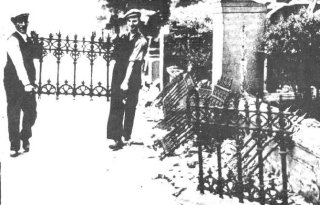
dickie.jpg

The couple were waiting at the bus-stop in Edinburgh when a mugger demanded the wife’s purse.  The husband said he would get it from the basket at her feet.  Instead of the purse he straightened up holding the artificial leg which, with a skill born of years of practice, he swiftly and adroitly detached.

In local parlance, he brained the mugger with this improvised weapon.  He was facing a charge of manslaughter.  The judge wanted to know if he had any previous offences of a similar nature that he wanted taken into consideration. 

‘Not at all,’ the defendant insisted.  ‘Any time before, one overhead twirl would have been enough. 

Even this time I only wanted to scare him off.  I never intended to hit him that hard!’

*****************

Officer Stopper (yes, his real name) noticed there was something peculiar as he drove by.  It was a moonlit night and the motorcycle was propped on the grass verge at an unusual angle.  On closer examination he noticed that the prop was an artificial leg.

Venturing a little further, Officer Stopper encountered the owner in a nearby field.  An ancient Lothario of 72 years, he was defying both nature and his disability, in flagrante delicto [I love the sound of that expression!] with a pretty young thing.  Female, of course.

It can only be surmised that it was raw envy that motivated Stopper to bring charges!

Narrow Water Castle Guide

NWCastle.jpg

Although clearly built for military fortification, Narrow Water Castle (the Keep on the Loughside, as distinct from the residence of Major Hall on the demesne behind the trees) is a fairly typical example of the Tower Houses erected throughout Ireland from the 15th to the 17th centuries.

Prior to that time the Normans or English when they invaded Ireland required much stronger and better defended castles such as those at Carlingford and Greencastle.  In this regard, it is notable that there exists the remains of an earlier castle mound a little further along the road to Warrenpoint, where King John, in Ireland to establish his sovereignty over his upstart Earls like De Courcy and De Lacey, is believed to have crossed these waters by pontoon bridge.  This mound may have had an earlier (12th century) fortification built on it, and been used as a base in the conquest of the east side of the Lough.(see below).

By the 18th century the conquest was complete and strongly defended residences, with castellation and other fortifications and a permanent garrison, were no longer necessary.  Tower Houses were essentially a tool for the Tudor conquest of Ireland.  The disciplined Plantations of Stewart and later periods would see English and Scots in ‘possession’ and living on the land and the Gaelic Order in flight. Heavy defences were no longer required.

It is not known for certain why this Castle at the Lough’s mouth was built to much stronger and rigorous defence specifications than that of Bagenal’s Newry Tower House. We believe they were built at the same time.  It must be assumed because of its location that it essentially provided protection from invaders from the sea.  For many centuries more England had good reason to fear her continental enemies would use Ireland as a platform for attacking her vulnerable western flank.

Tower Houses were normally rectangular with three or more storeys.  They comprised a staircase (in one of the Towers) allowing access to superimposed chambers which also had closets and latrines skilfully inset into the walls.  Sometimes [as here] they had angle turrets allowing soldiers to bombard attackers from on high, castellation and loop-holes for defence and secure doors with in-built devices designed to frustrate forced entry.  The curtain wall enclosed a bawn which in earlier times contained some wattle cottages of allies or favourites, or others requiring protection.

Overlooking the Lough there is a defence wall turret which projects slightly.  Close to it there is a narrow door opening, now blocked, but believed to be an original feature.  Here a rocky outcrop above water level may have been an original landing point for boats.

The Keep is constructed of dressed granite and limestone.  It is three storeys high (with an attic) and internally is 39 feet by 33 feet. The walls are from four to six feet thick.  The internal doors have lintels and the larger window embrasures have rear-vaults that were constructed on mats of wicker.  This is known as the wicker impressions survive on soffits.  The Tower’s entrance is at ground level, has a pointed head, is rebated internally and has an external rebate between plain chamfers. A wooden door opening internally closed against the internal rebate.  The external rebate probably accommodated a hinged iron grille which was secured from within the tower using a chain passing through a hole in the right-hand jamb.  The entrance was enclosed externally by a small forebuilding.  A slight trace remains.  It was probably roofless to allow use of the machicolation on the tower’s roof from which defenders dropped objects on assailants.

After the entrance is a small enclosed lobby with a corbelled vault above, again allowing invaders to be attacked.  A stair rises to the upper levels.  There is also an opening to a large ground-floor chamber with a small wall cupboard.

The first-floor chamber above it is lighted by a small window opposite the door.  There is also a loop a few steps down.  This chamber now has a modern timber floor and a semicircular barrel vault.  It has been utilized in recent times for Medieval Banquets associated with local Festivals.  There are windows east and west and in the floor of the west embrasures is the opening to the ‘murder hole’ above the entrance lobby.  A latrine is contrived in the thickness of the south wall, the outlet of the latrine chute visible at ground level on this wall’s exterior.

The second floor apartment was the principal residence.  It had windows in each wall. The embrasure was blocked in the 17th century when a fireplace was opened out in the adjacent wall.  The south-east angle of the chamber is splayed to accommodate a closet.  The wall contains a small gun hole covering the entrance from the stair to this main chamber.  In the wall are closets with cupboards. Some may have had bunks for sleeping.

At roof level there is a drained wall-walk.  The east parapet is thickened at one point to accommodate an added chimney flue. The machicolation is on the west, above the entrance.  The projecting corbel is double-membered. Below wall-walk level there was a gabled roof enclosing the attic storey.  On the west the roof butted partly against a rectangular turret rising a further storey above the wall-walk. Its chamber was entered from the north wall-walk.  It was ceiled by lintels and lighted by loops.  It rises to an embattled parapet with projecting stone-course at the base.  The roof of the turret was reached by ladder.

The Castle was leased in November 1570 to John Sancky as Warder for a period of 21 years.  It was described as ‘one new castle within which are two chambers and a cellar and a hall covered with straw and a stable nigh unto the said castle… and nine cottage(s) covered with earth within the precinct of the said castle..’

That the locality was not yet secure to the English is evidenced by the recorded activities of Shane O’Neill who had a castle at Fathom, and of Hugh Magennis about Narrow Water and of (Sir) Arthur Magennis who held the Castle in 1608.  Then came the Flight of the Earls and the subsequent Plantation of Ulster.  There was to be more rebellion from 1641 but the suppression that followed and the subsequent Williamite settlement brought total defeat for the native Irish.  The following century saw the enactment of the punitive Penal Laws.

Narrow Water Castle was put into state hands in 1956 and subsequently some conservation work was carried out on it in 1957-9.  Now the Heritage Trust administers it.

It was probably an accident of geography and local topology that the IRA chose this site to attack the British Army in the early 1970s, when with a number of explosions (and on the same day that Lord Mountbatten died off Mayo in an explosion on his motorboat) many soldiers perished, some sheltering under the wall of Narrow Water estate. The ambush was directed from the opposite shore, just yards away but in the Irish Republic. The final irony of that terrible day was that a British tourist, a man whose day job was in Buckingham Castle, was attracted by curiosity to the shoreline that once served as the southern slipway of the Narrow Water boat ferry by Daveys on the Omeath Road, and was mistaken by soldiers as one of the IRA team and was shot dead by them. The irony is unlikely to have been lost on the active service unit.

Barely distinguishable now beneath its thick covering of rhododendron shrubs, there lies the remains of a Norman motte about 400 yards south-east of Narrow Water Castle , between the road and the Clanrye River estuary. It is set on a natural scarp where this returns sharply northwards, the slope of the mound on the south and east being continuous with that of the natural scarp.

It is said that King John’s forces crossed Carlingford Lough by pontoon bridge here in 1210 and utilised (or raised to a greater height for defence purposes) this motte, from which they went on to take and control the wider area.

The mound is about four metres high at maximum – though it was probably higher than this 800 years ago – and thirteen metres across at the summit.  It was partly enclosed by a ditch, tracable now only on the north where it is about eight metres wide and up to one metre deep.  This feature finishes on the natural scarp on the south and east.  The whole may be located on O.S. 54 at grid reference 129192.

.. Isaac Corry betrays Ireland …

Virginity Test

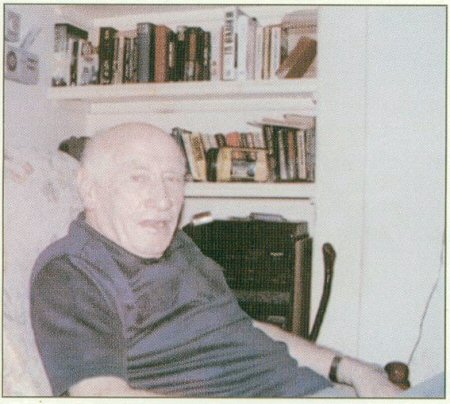
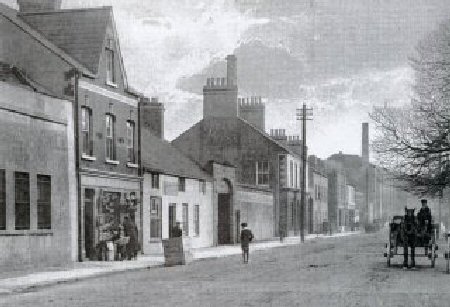
mghnstreet.jpg

Sipho Malinga was enjoying his explanation.

“I have several ways to test the boys for virginity,” he expounded, in the school in Kwazulu Natal, “all based on sound medical practice.

While my colleagues are checking that the girls’ hymens are intact, I ask the boys to urinate – without using their hands – over a thin piece of wire strung about a metre above ground. Those whose golden streams pass over are virgins, the others are not. Also I check the foreskin. If it is hard, the boy is pure. The most certain test of all is to check the backs of the boys’ knees. If there is an indenture behind the knees, that is a sure sign of sexual activity.

My role is so much easier that that of my colleagues testing the girls. To the best of my knowledge they have only the one test!

We do not force the boys to take the test, but those who refuse must have a reason! Also we offer rewards like toy watches and mint cake.”

Denise Hagan Concert

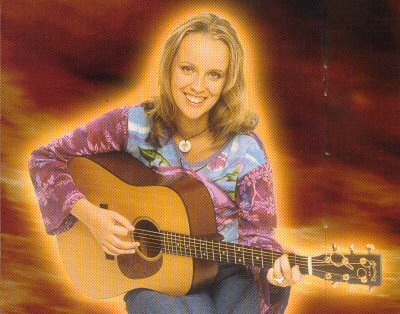
Denise.jpg

There’s something special about witnessing birth. I was there for all of ours (our children) and these were the highlights of my life.

I witnessed the birth of a star last weekend. Have no doubt, those lucky enough to have attended Denise Hagan‘s two concerts at the Town Hall on Friday and Saturday will boast about it in the future. This beautiful and strikingly attractive young Keady lass is about to take the music world by storm. It couldn’t happen to a nicer person. They weren’t her first gigs of course, but this was the launch of a career in her home town (I still have difficulty with the city word!).

She has recently acquired new, strong, able and directed management and her burgeoning success is well choreographed. Her first CD will not be launched until February by which time aficionados will be well-familiar with its contents through multiple air play in the media. A tour in America is already set up. They love her type of music and it may be a long time before we are treated to an encore performance.

I heard the fantastic ‘Pins and Needles’ on the George Jones Radio Ulster show last Wednesday. Of course Denise performed her own song live and conducted a charming interview with the Twin Personality. He was moved, you could see that. When she finished, he raved, “I’ve got the best job in the world. I really have, meeting talent like this.” He has.

Can you imagine my delight when Denise and two continental musician friends (Manfred and girl) turned up at the Railway Bar session the very next evening. They treated us to several gems off her forthcoming album in a spontaneous jam session.

I have many favourite composers but Joni Mitchell must top the list. She did till now. Denise is rivalling her. The younger woman has a finer voice, is more beautiful and she’s from South Armagh. Her songs, already very good, will only get better. I predict that within the year (a few, at most) she will eclipse Tommy Makem as Keady’s most renowned star.

On stage she is charming as ever, with a powerful and commanding stage presence. She is confident, with a crystal-clear bell-like voice. She plays guitar well too. Earlier this year she supported Shania Twain at Kilkenny Festival. She will surely soon be just as famous as her.

Order your copy of her album now!

Newsflash:  New Denise Hagan scheduled for the Town Hall on Sunday 18th April!!  Check the local press for further details.  And mind you don’t miss it!!

Logical Deduction

Reasoning Tests 

If you are suffering from withdrawal symptoms since these were abandoned from your children’s grammar school entry examinations, here’s a few to amuse you.  You ought to score more than 60% correct!

1                 To succeed at academic examinations it is necessary to study.  Therefore if a student works hard in a particular subject, he or she should do well when it comes to the examination.

Which of the following best describes the flaw in this argument?

A         It assumes that it is necessary to study in order to succeed

B          It overestimates the value of study in preparation for examinations

C         It ignore the fact that some subjects are more academic than others

D         It assumes that studying hard is a sufficient condition for academic success

E          It ignore the fact that some students don’t need to study much to succeed

2                    A solid cube has twelve sides.  If all eight corners are sliced away while leaving part of each original edge intact, how many edges has the new solid?

A         12

B          24

C         32

D         36

E          44


3          One in 1000 people in Britain is estimated to be a carrier of the potentially fatal liver disease hepatitis B, although this estimate is probably far too low. There should be a mass vaccination programme to eradicate this disease.  Seventy five countries carry out such a programme and including hepatitis B in Britain’s existing vaccination programme would be a simple matter.

The main objection has been the cost.  At present each shot of the vaccine costs