Missioners

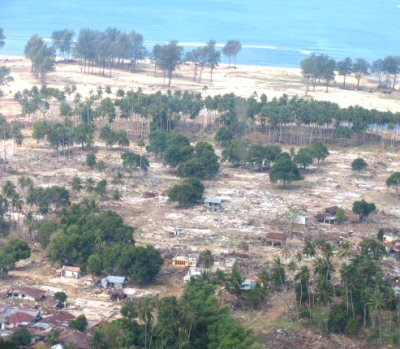
fromair.jpg
Clare Barker writes on behalf of her father Arthur McGuigan of Derrybeg Drive.  Arthur recalls the Missions of old, where the first week was for women alone, the second for men.  Arthur and his mates ‘bunked’ the service and kept warm by sitting in the empty buses on The Mall!  A religious mate would be waylaid on his way home so that all could report on what the Missioner was on about that evening!
 
All went well until his father Raymes caught them.  To the last man, they were frog-marched to the Church and supervised for the duration of the service.
 
I must admit I rather enjoyed the Missions.  All that ‘fire and brimstone’  taught me a love of horror movies!  
 
Then there was the Confraternity.  Again, one night for men, one for women.  You sat under a Shield naming your area.  A clever device that, for ‘absent’ colleagues could quickly be identified and followed up!  Seriously though, the Cathedral was always packed.  I miss that level of community faith.

Egyptian Arch

arch.jpg
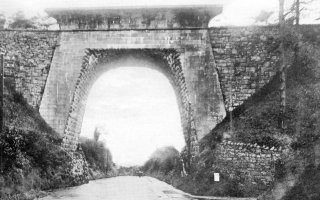
The Egyptian Arch was completed in 1851 and was designed by William Dargan.  The design was based on the Pylon, or gateway to an ancient Egyptian Temple.  The latter of course is the origin of the name that we give to those giant steel structures that carry power lines between settlements.


Read moreEgyptian Arch

St John of God Centenary

St John of God was born Joao Cidade in Portugal in 1495 (about the time Christopher Columbus was making his voyages of discovery to the New World, later to be deemed America) but from the age of eight years, he lived in Spain.  
 
The Irish congregation of the St John of God community was founded in Wexford in 1871 by Bishop Thomas Furlong and Mother Visitation Clancy.  Just thirty-three years later, in August 1904, following the request of Dr O’Neill, Bishop of Dromore, three members of the Order travelled to Newry to take charge of the Daisy Hill Infirmary.  
 
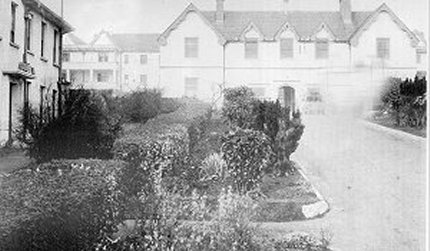
Inevitably they worked too in the workhouse that was on the same grounds.  Agnes Boyd of the Board of Guardians (grandmother of Russell Boyd, of Boyd’s Stores) saw to that.  Sr M Malachy Kearns was appointed as nurse of Newry Workhouse at

UnChristian Guardians 1860

whfoyer.jpg
An editorial in the Dundalk Democrat of 21 July 1860 decried the miserliness of the Guardians of Dundalk Union in regard to the paupers’ diet. 
 
This ‘wise’ Committee led by the cheese-paring Lord Clermont deliberated for hours not on how they would make the victims of misrule and poverty more comfortable but to ascertain the length they could go in hurrying them to the grave without incurring the guilt of murder.  All to save a paltry one hundred pounds a year on diet. 
 
The unfortunate paupers have been in the habit of getting some soup made from the necks and hocks of meat.  A neck part of a forequarter was sent in once a week, the better part of which was given to the officers and the neck and inferior parts boiled into soup for the paupers.  Too good for them, the Committee deemed.  In future they were to taste only a cow’s head boiled into two hundred pints of water as soup!
 
The Dundalk Board take as their best example the pauper-starving Board of the Newry Union who act so shamefully as to send the poor to bed groaning on the two pence worth of food doled out to them during the day.
 
The editorial goes on in this vein, condemning the unchristian acts of men who know little of charity and whose penury (i.e. Newry Guardians) it would not be creditable to emulate.  It refers scathingly to the ‘Cow’s head Committee’.

Fields of Grace

FieldOfGrace2.jpg
In rural Ireland long ago – and often in towns as well – handicapped, deformed or less-able members of the community were hidden away from society or secreted in upper rooms or in barns, I’m told.  That is certainly my mother’s recollection and we have all read about such matters in the literature.  From what I now learn, they were the lucky ones.
 

Read moreFields of Grace

Ballagh Millstone

WomenAtWork.jpg

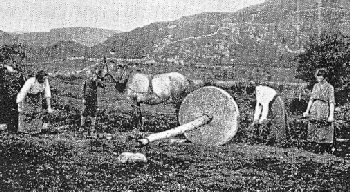
On the edge of the Calliagh Berra’s lake on the top of Slieve Gullion is a massive millstone, clearly recognizable in the photo from its circular shape and the hole in the middle. I’ll tell you the story and it’s the God’s truth, for indeed any other attempted explanation would be preposterous.

There was a time when the milling of corn was one of the chief, and indeed the most lucrative enterprises in the country. People have to eat, don’t they, whether in war or in peace? And the owner who has the hardest, and most long-lasting and largest millstone, capable of grinding the greatest quantity of wheat in the shortest space of time and over an extended period of many years, clearly would have the advantage over his rivals.

There was a mill in the Ballagh district one time in need of a new millstone and the owner, one Peter O’Mara was determined to outshine his rivals. He knew that the granite stones that made up the stone-age passage grave on top of Slieve Gullion could not be beaten for their hard and long-lasting qualities. He cared nothing for the customs and long-held beliefs that these graves should not, at any cost, be interfered with. In the middle of the night – for despite his callousness, he cared not to let his neighbours know the source of his new millstone – he arranged to have one of the largest and appropriately shaped granite rocks removed and transported to his mill. It took little shaping to turn it to its new purpose and in no time at all, it was grinding out meal by the ton. Peter’s mill thrived for many a day and he became rich.

But like all before him and since, that dared to interfere with things of the ancestors, bad luck plagued him thereafter. Though his mill thrived, his cattle and indeed his family did not. His cows were dropping off with all sorts of disorders and over the space of a few years he lost his wife and three of his children to strange diseases. It was an oul’ neighbour woman that suggested to him that maybe he had done something to bring the curse of the gentle people upon himself. Then he knew.

He arranged, as fast as he could to right this wrong. But it was easier for the oul’ donkey to carry his heavy load down the mountain than it was to carry it back up again. He was but two hundred metres from the passage grave, at the side of the Calliagh Berra’s lake, when he dropped down dead and the millstone landed in its present location.

But no more harm came to Peter for his intention was good.

And if you can think of a better explanation why that stone is there, well, I’d like to hear it!

Fulacht Fiadh

newgrange.jpg
In connection with the recent archaeological finds at Loughbrickland we noted that a Fulacht Fiadh site may have been identified. 
 
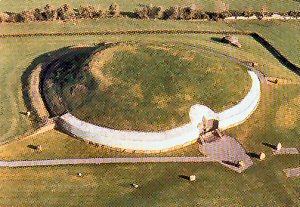
Our photo shows one a Fulacht Fiadh at Rathlogan, Kilkenny which portrays the typical horseshoe shaped mound and the normal location in marshy ground close to a water source.  The practice of using such sites persisted from the Bronze Age (the later of the two recently identified settlement eras near Loughbrickland) into the historic period and the method of using them is well described in early texts.  Their remains are frequently discovered during land reclamation.
 
Almost invariably they contain a rectangular pit lined with wooden planks or stone slabs to form a trough, discovered during archaeological excavation under the open part of the horseshoe-shaped mound.  Water was heated in the trough by rolling hot stones into it from a nearby fire.  It has been proved by experiment that water can be boiled in this way and meat cooked in it.  The hot stones often shattered on contact with the water and the mound was formed by shovelling the broken stones out of the trough for the next cooking session.  Part of the timber trough often survives in the damp conditions often prevailing on these sites.

Dromantine History

MillenniumWindowDrom.jpg
Dromantine will be extensively featured on Newry Journal for a short while.  Every Catholic (and we hope, many of other faiths and none) is familiar with Dromantine Sundays, a fun day organised to raise funds for the SMA [Society of African Missions] when the beautiful grounds of this most impressive estate are open to all.  The College now serves mainly as a Retreat House and no finer place for such activity could be imagined.  The well-kept grounds, the extensive lakeside walks, the impressive 19th century country house, the new Conference Centre, the goldfish pond, the drumlin countryside panorama – it is the perfect place to de-stress and reflect on the spiritual and contemplative life, and all within a few miles of Newry centre! 
 
I will shortly feature the work in Africa of one of Newry’s greatest sons, Bishop Carroll of the SMA, who was trained at Dromantine.  Then I intend to summarize the centuries of history of this great area, its people and the estate.  Finally I will refer to the recent renovations and the role of the College today.  First, a short summary of IMPORTANT DATES.
 
The Magennis clan was for centuries the ruling clan in Iveagh, an extensive area covering most of the present day’s west County Down and reaching from Lough Neagh in the north to the Irish Sea in the south.  Some leaders occasionally participated in the resistance to the encroaching powers of the Normans and later, the English.  Most however, took a more pragmatic approach to ensure their survival.  Thus in the seizure and ‘re-grant’ era of the early seventeenth century, Arthur Magennis, in 1611, received 4,200 acres in ten townlands within the precinct of Clanaghan (Glen).   The Magennises continued in ownership for a century and a quarter.
 
1611  Arthur Magennis receives Dromantine in ‘re-grant’.
1737  Dromantine put up for sale.
1741 John Innes of Scotland buys Dromantine.
1808  Building of the present house.
1810  Construction of the lake.
1859  Extensive construction work on House.
1865  Work on House completed.
1922  Dromantine House bought by Samuel McKeever.
1926  The Society of African missions buys Dromantine.
1927  First eleven of 587 priests ordained.
1931  St Patrick’s Wing built.
1935  St Brendan’s Wing built.
1936  Work begins on Chapel.
1959  St Colman’s and Assembly Hall opened.
1974  Dromantine closes as a Seminary.
1975  Dromantine opens as a Retreat Centre.
1998  Major renovation work begins.
2001  Renovation work completed.