The late Jim Murphy of Dernaroy, a noted Gaelic footballer in his time and one time Newry and Mourne Councillor, was a pavhee most of his life.
Newry News and Irish Fun
 John McCullagh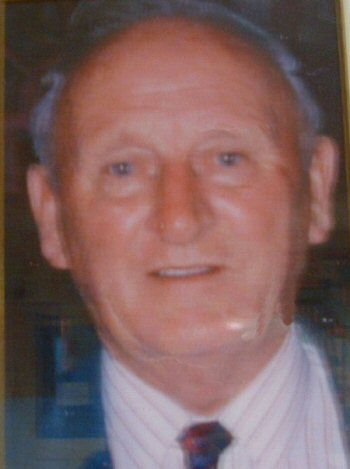
The late Jim Murphy of Dernaroy, a noted Gaelic footballer in his time and one time Newry and Mourne Councillor, was a pavhee most of his life.
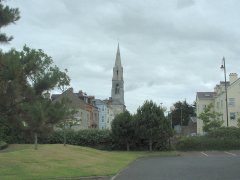
Patrick Shea, author of Voices and the Sound of Drums and the only Catholic permanent secretary at Stormont at the outbreak of our Troubles prepared a memorandum for the perusal of ministers and fellow senior civil servants on ‘understanding the relationship between the
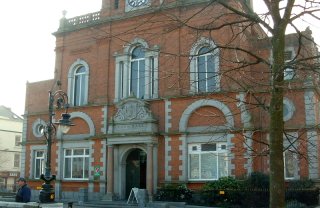
Family background
Robert Macan (b. 25 October 1774) a banker of Ballinahone House, Armagh and Canal Street, Newry, was the only surviving son of John M’Can, (later Macan), (1729-1801), grandson of Robert McCann (b.circa 1685) of Cloghoge, Co. Armagh. Robert is listed as a freehold landowner in
In the Irish language the word was written Ceile-De, meaning companion, or even spouse, of God. In the beginning, the Culdees were separated from the mass of the faithful, their lives were devoted to religion, and they lived in a community. In the Irish annals the epithet Ceile-De is appropriately given to St. John, one of the twelve Apostles, to a missioner from abroad whose coming to Ireland is recorded in the Four Masters at the year 806, and to Aengus, the well-known monk and author of Tallaght, whose penances and mortifications, whose humility, piety, and religious zeal, specially marked him out.
The Culdees were holy men who loved solitude and lived by the labour of their hands. Gradually they came together in community, still occupying separate cells, still much alone and in communion with God, but meeting in the refectory and in the church, and giving obedience to a common superior. St. Maelruan, under whom Aengus lived, and who died as early as 792, drew up a rule for the Culdees of Tallaght which prescribed the time and manner of their prayers, fasts, and devotions, the frequency with which they ought to go to confession, the penances to be imposed for faults committed. But we have no evidence that this rule was widely accepted even in the other Culdean establishments. Nor could the Culdees at any time be said to have attained to the position of a religious order, composed of many houses, scattered over many lands, bound by a common rule, revering the memory and imitating the virtues of their founder, and looking to the parent house from which they sprang, as the children of Columbanus looked to Luxeuil or Bobbio, or the Columban monks looked to Iona. After the death of Maelruan Tallaght is forgotten, and the name Ceile-De disappears from the Irish annals until 919, when the Four Masters record that Armagh was plundered by the Danes, but that the houses of prayer, “with the people of God, that is Ceile-De“, were spared. Subsequent entries in the annals show that there were Culdees at Clonmacnoise, Clondalken, and Clones, at Monahincha in
To those of the eighth century, such as were represented by Aengus, were soon added secular priests who assumed the name of Culdees, lived in community, subjected themselves to monastic discipline, but were not bound by monastic vows. Such an order of priests had, in the middle of the eighth century, been founded at
Those at
Appearing, then, first in

This, allegedly a true story, was contributed. Only the names have been changed, for many of us might hazard a guess as to the real identity of the main protagonist! Please note it is not the character here pictured!
Mick was a thief. From the time I knew him he was always up to something shady. He had never worked yet he always dressed well and most of the time had money in his pocket.
Townlands A-Z
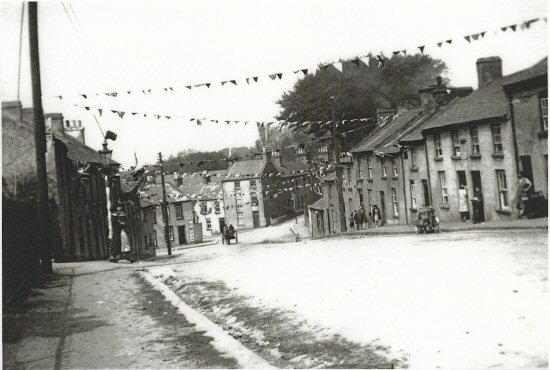
Janine Masters kindly donated these Old Newry photos today. We upload them immediately because they are so interesting.
Mavemacullen is the name of two townlands
|
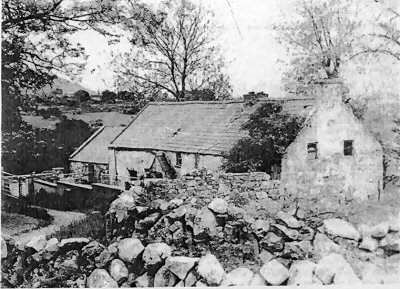
The Williamite ‘settlement’ following the defeat of the Irish at the Boyne saw extremely harsh laws introduced to suppress the Catholic faith and the priests and bishops who helped maintain and propagate it.