‘When the school holidays came,’ Fabian went on, ‘we would set off by pony and trap to Omeath. My father operated a jaunting-car to Calvery and sometimes even to Carlingford at the weekends.
Newry News and Irish Fun
 John McCullagh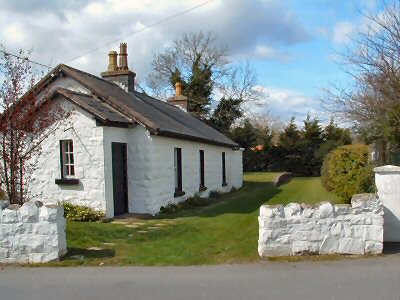
‘When the school holidays came,’ Fabian went on, ‘we would set off by pony and trap to Omeath. My father operated a jaunting-car to Calvery and sometimes even to Carlingford at the weekends.
Vapour boast: ’till hear him vapour, ye’d think he owned the townland’
Words quarrel: ‘we’d words once, but we don’t spake now’
cross words: ‘We’d words, and now we’re fell out’
Yalla yellow
Yammer complain
Yap complain, gern: ‘quit yapping there!’
n. ‘he’s nothing but a wee yap’
yerk pull: ‘he yerked me be the arm’
‘he was yerked into the ditch’
Yoke car, machine: ‘that’s a quare yoke yer driving’
Matched: ‘them two’s well-yoked’
Yon that
Your day generation: ‘Aye, twas different in your day!’
Yowl cry, yelp
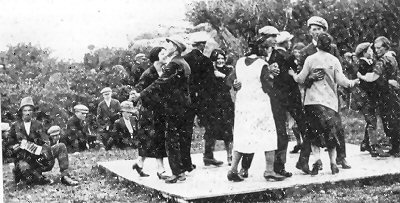
‘The wakes and funerals of the Irish,’ wrote Rev Nelson in his History of Creggan Parish (1840), ‘are no less interesting. On death the corpse is carefully washed over and, if an adult, dressed in the usual manner. It is placed under board, as it is called, that is, on a long table (often provided by the funeral undertakers who keep one for the purpose) about six foot long and two foot wide but when this cannot be got, two small tables pushed together and draped with a white sheet. The corpse too is covered in a white sheet as is the wall at its head. To the latter are attached great quantities of emblematic pictures of crucifixion, resurrection etc. The table under which the corpse is laid is covered with candlesticks varying in number according to the circumstances and respectability of the deceased. The number is always odd and varies from three to thirteen.
The Rhymers or Keeners, mostly women, are sent for from a considerable distance to perform the funeral rites. Arriving at the house they partake of some refreshment and a glass of whiskey (Are these things different? Ed) then the females are arranged into two divisions, one on each side of the corpse. One of the Keeners then begins her lamentation in Irish, expressing some of either the good or the bad qualities of the deceased, or a number of foolish rhetorical questions such as, ‘Why did you die?’ or ‘Did you not like the world?’ The Keenagh or cry then goes up and all join in. The Rhymers on the other side then begins her lament and is joined in like manner by the rest, the one praising, the other disparaging the corpse.
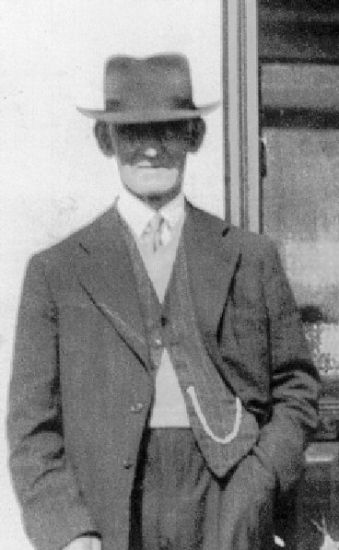
As in most callings there were two or three classes of pedlars. The King of Pedlars was the man who, with a tidy balance at the bank, and an account with some great wholesale drapery house, usually drove a van with a horse along the principal roads of the country and disdained to call on any person lower than the rank of strong farmer. As a rule he was loud, pushing and loquacious, a good salesman and a decent fellow all round.
Then came the pedlar who drove a mule or donkey-cart and who also frequented fairs where his gaudily-decked booth containing coloured, cotton handkerchiefs, cheap muslin and articles of small ware, was a prominent feature. He was more or less looked down on by the big man who drove his horse; but the man with the mule had in turn a corresponding contempt for the poorer brother who, with his pack strapped over his shoulders, sought the favour of his customers on foot. But the latter wayfarer had one advantage over his bigger brethren. He could, and did penetrate further into isolated districts and so reap many small orders from clients who were not so much in touch with highways.
And in truth this latter specimen of the tribe was the most interesting of the lot. He was generally past middle-life with the healthy, hardy glow in his countenance that much living in the open air usually gives. His face seemed so open and truthful that it was difficult to believe he could over-praise his goods or over-reach one in a bargain.
But with all that our pedlar was a man with the shrewd eye to the main chance. It was pleasant to see him approach the open door of the farm-house, and if the time was evening and he contemplated resting for the night, his greeting was doubly voluble and gushing:
It recalls balmy breezes with the scent of greening grasses and wild flowers and herbs.