Cosgrave: Yew Tree at head of Strand

‘The Yew Tree at the Head of the Strand’ was published in 2001 by Liverpool University Press and, a paperback of about 200 pages, retails [or it did when I purchased my copy] at the hefty price of around


It is a memoir of early life in Newry of the 40s and 50s by Brian Cosgrove, brother of Art Cosgrove, 1997 President of UCD and one of the four people principally featured on Haughey’s Folly [Millennium Monument] close to the Five Ways Roundabout. 

Brian is Professor of English at Maynooth – and has to incessantly illustrate that fact with innumerable and tiresome references to literary greats throughout his reminiscences. 

I find Cosgrove’s style of writing most annoying.  I want to read his stories of the O’Hare yacht disaster in Warrenpoint, for example, (dismissed in three short sentences, including an unwarranted speculation as to the cause of the fatalities!) but consider it irksome in the extreme to find it prefaced with a Latin quote, Et in Arcadia Ego which Cosgrave conjures for presumed relevance to his own view of a world overshadowed by death.  This tragic tale, infamous at the time remains largely untold (Who were they?  How many perished etc?)  but for a young Brian “far, far worse was the death of a neighbouring toddler in a road traffic accident! ” (Why was that worse?  How many remember that, compared with the O’Hare disaster?)

I feel, though a literary person myself, that this man’s lectures would bore me stiff!  He spoils every good story by wrapping it in such pomposity and pretentiousness. 

Even his stories about serving in his father’s pub [then just Cosgrove’s, later the Wander Inn – which we suffixed with and Stumble Out – now Soho Place, the best meal in town!] smack of a smart-alec student whom none could like.  I find him a boring guy who led a boring childhood, watching others have a good time while, cold-eyed, passing critical judgement on their life styles.

Others I know [our Bishop, for example] enjoyed his book. 

Make your own judgement.  Find out for yourself. 

But I’d respectfully suggest you browse it in the library before purchase. 

I don’t feel I got my money’s worth!
Cal Mor Caraher

The 18th century had its own crop of rapparees or highwaymen.  


At the Summer Assizes of 1735 one Macklin, a famous horse-thief ‘went down the nine steps’, as was said in Armagh of those on whom the death penalty was passed.  These led to the condemned cells below the Sessions House in Market Street. 

Read moreCal Mor Caraher

Oliver Plunkett

Before he was himself raised to the Archbishopric of Armagh, Thomas O’Fiaich wrote about his illustrious predecessor Oliver Plunkett – one of only two Irishmen raised to sainthood by the Vatican [the other being Laurence O’Toole, church reformer of the late twelfth century]. 

Read moreOliver Plunkett

Frontier Town: Canavan

The research and writing of ‘Frontier Town : An illustrated History of Newry’ was undertaken by Tony Canavan when he was curator of Newry Museum over a decade ago.  Though Canavan is a famous name in Newry, Tony is from Belfast.  He returns here shortly to give a lecture in the Carlingford Lough series.  I’ll be there.

I am an ardent fan of this wonderful history.  It is excellently researched and reads like a racy narrative.  We are very lucky to have such a tome at our disposal – that is, those of us who purchased early and have looked after our copy.  I say this because Blackstaff [ISBN 0-85640-430-6] unfortunately bound this paperback volume with a brittle gum than deteriorates with time, and most copies are by now, literally in bits!

I seldom hear reference made to Canavan’s work locally – in Newry History Society, for example – and wonder if begrudgery has again raised its ugly head.  Certainly any localised research must begin here.  His Preface succinctly expresses the role of the town in Irish history.  Personally I still prefer Frontier Town to Newry City, the former conjuring thoughts of our pivotal role so often in the past: the latter a sop – from QE2 – to aspiring ‘spinners’.

Those of us who lived through much of the twentieth century may take exception to parts of his final chapters, though it is always most difficult to assess living history.  He wrongly identifies Irish Labour [I was a member and attended Annual Conferences in Liberty Hall, Dublin] on Newry Council with Northern Ireland Labour Party and casts the principled rump led by Tommy McGrath as ‘dissidents’ when they were faithful to party policies, whereas Pat McMahon – whom he extols – went on to unfairly allocate homes on the basis of ‘I want my bite of the cherry!’

He dates the Great Hunger from 1844-1849 and alleges it had no effect on the town.  Readers of Workhouse History on these pages will disagree!  There are other anomalies but errors are few.

If you only ever read one book about Newry, make sure it is Canavan’s!

Finn and Calliagh Berra

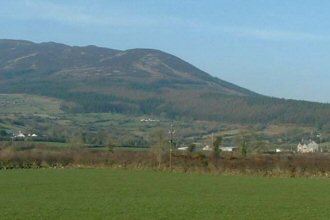
Lislea.jpg

‘It’s very gentle country all aroun’ here but I’ve been to the other side of Slieve Gullion where they had giants and witches as well. 

Did ye iver hear of Finn McCool?  Well, there’s some say it wus he and not the Calliagh Berra who threw the White Stone of Dorsey.  But sure mebbe both had a han’  in it, for they were both upon the earth togither.  An if he wus fleet o’ foot an’ strong of limbs, she wus strong in spells. 

Do ye know her house on the mountain an’ the lake beside it?  Sure it was into that very lake she coaxed fool Finn.  An’ in he went fresh an’ youthful an’ out he come a done oul’ man.  An’ they had a high time making him right again.

Often I started up the mountain to see the lake but I cud nivir head the whole road, I wus so afeard, for ye know a wedding party went into her house once, an’ they turned till stone.  Her house goes down and down an’ in the bottom chamber sits the Calliagh Berra herself till this very day.  Ay an’ will, till the end of time. 

But where Finn is I know not, or if I do, I disremember’. 

Oxtercogged with Fairies

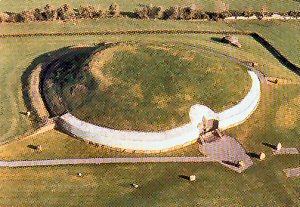
newgrange.jpg

‘Grimes oxtercogged [went arm in arm, was intimate] with the fairies often.  He’d be in conversation with them and people wud hear him talking till them, but he’d always deny it.  Many a time going till the well he was aheared tellin’ them to keep off him.  He was a wee bit of a man: she was six foot, and he’d even deny it to her.’

‘Cows were sometimes elf-shot when I wus wee.  I mind a man cud cure the bother.  He’d take a bit of kindled turf from the fire be the tongs an’ move it from side to side an’ say a bit of a prayer.  It wus then put under the cow’s nose an’ she wus soon better.’

‘Me gran’father minded a fight at the graveyard gate between two funerals that arrived tillgither. It wus a hell of a scrap by he’s account.  They went for each other like Turks, all because of a notion that the corp that was through the gates first wud hev the other bludy fella to chop and carry him.

People wur quare in them days – why if oul weemin had water till throw out at night they’d be afeared to do it in case it wus hurtful till some one, but whether it wus ghosts or fairies they wur afeared of I haven’t a notion.  An’ if he went for a walk in the graveyard an’ tripped on a grave it wus bad, but heaven help ye if ye spread yer length in such a spot.  Ye might just as well go home an’ make yer will. 

Many a grave wus hoked [reopened] in the oul’ days, an’ not be people wantin’ bodies for doctors at all, but be people wantin’ skins for charms.  It’s a pity till God ye wurn’t here in me gran’father’s time.  He knowed it all.’

How can you let speech like this die out?  When did you ever hear such verbs as ‘oxtercogged’ and ‘elf-shot’?  Eh?

Shelve Him

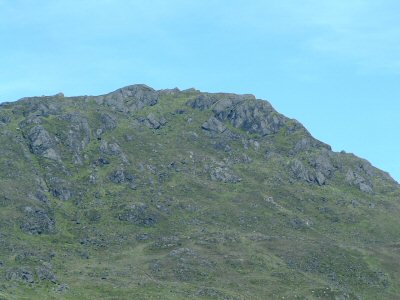
ButtercraneInside.jpg

‘The man urgently needs shelving!’ the ambulance man offered – which I thought was a particularly harsh judgement from a medical man in the mercy business.  I checked my dictionary – shelve; to abandon, to cancel, put an end to.  What could he have done to deserve so harsh a judgment?


The crew had had to remove the door of his apartment by the hinges and clamour over mountains of magazines to rescue Patrick Moore from his paper tomb where he had been trapped for three days.


‘He is an obsessive collector of pornographic magazines with tens of thousands of publications stacked to the ceiling.  He’d made a corridor through so he could get in and out.  Finally he unbalanced the stacks.  I’ve no sympathy with him.’ 


So he had required him ‘shelved’ rather than the apartment!


Had he met a similar case before?  Harlem brothers Homer and Langley Collier were crushed to death by their collection of encyclopaedias and clutter in 1947.  It took 18 days to find the bodies under the debris which included a Model T Ford, an antique motorbike, a collection of stuffed rats and ten pianos.’