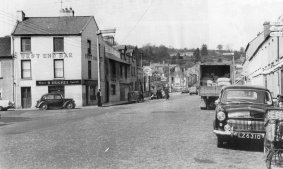
Christopher Carr writes to update us on the pedigree of a few characters of old. Since his forbears – like mine – come from Monaghan Row/Street, I have a special interest. Hope you have too.
 John McCullagh
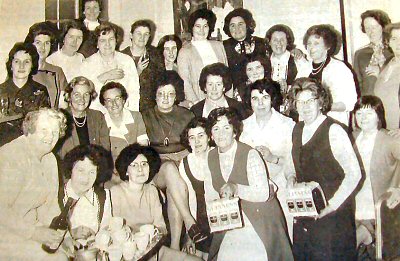
Gerry Monaghan Part 5
5. Thirsty Work
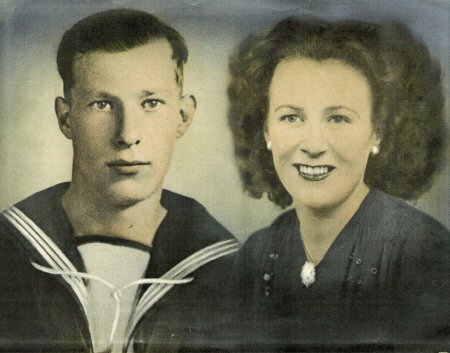
Joe had served as a soldier in the Royal Irish Rifles in the Great War (First World War). He had been wounded at the Dardanelles. He was struck during the battle for Gallipoli and at the height of that ferocious, hopeless attack. He was towed on a raft across the waters to the beach. This raft had a stout, wooden partition behind which the crouching soldiers could hide, crouching behind this, taking the safe side, shooting up at the Turks who were pouring fire down upon them from the high, rocky cliffs. The bullet that struck Joe penetrated and lodged in his helmet and partially entered his skull. Seriously injured, he was invalided out of the army. He recovered, only to suffer the effects of the chronic unemployment, encountered by so many of his kind. He hated Churchill whom he blamed for this debacle.
Still as a wounded ex-serviceman, Joe was entitled to a government gratuity to assist in his rehabilitation in those immediate post-war years. The money would be paid only if the appellant could prove that the money would be spent in some wise and worthwhile venture. The amount of this gratuity was
Titanic Poem
I am indebted to my old friend Ben Hughes for the time, patience and companionship he displayed as he brought me Down Memory Lane. I will return and note salient facts and anecdotes in the near future. Meanwhile I reproduce here a very worthy poem entitled Titanic. It was found on a scrap in the toolbox of Ben’s father, who was a master carpenter working on the famous ship. The author is unknown.
TITANIC
The pride of the seas, at anchor she rode
Awaiting her human freight
Her crew pent up and eager for sail
Captain, stoker and mate.
Man stood on the shore
And looked up with pride
Upon what his hands had made
The unsinkable ship, in majesty, sailed
His hard work and toil repaid.
He had strained every muscle, sinew and nerve
To make her Queen of the seas
And she sailed from her berth on her maiden trip
A floating palace of ease.
But another sailed from the frozen world
No pilot at the wheel
No hand of man had shaped her plan
Nor modelled her frozen keel.
No cheer rang out as she turned her prow
To drift towards southern clime
Yet she carried on board a message to man
That would ring down the annals of time.
On, on in the night sailed God’s silent ship
Ploughing ocean currents and stream
Smote man’s titan work a terrible blow
That shattered her beam from beam.
On into the dark she passed away
Steered by a hand unseen
But a log she had left – that all might read
‘Man shall not reign supreme’.
Daughter’s Wedding
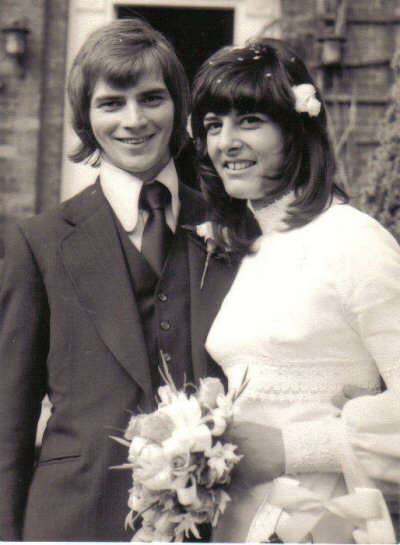
Here was I, indulging in a daydream about my darling daughter’s forthcoming wedding, when – skimming through an old newspaper – I came upon this poem. Boy, were my eyes opened?
Sunnyside: Kathy Morley
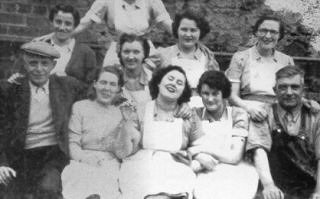
Our next nearest neighbours in Sunnyside was the Morley family who lived a mile off down the road.
Forced emigration
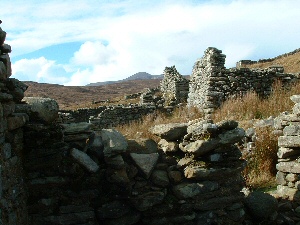
The disgraceful extended incarceration of four Mayo farmers for protesting the danger to their lives and families from Esso’s high-pressure gas-lines running contiguous to their homes, brought to mind the similar treatment of their forebears a century and a half ago from occupation landlords.
Padraic O’Conaire Poems
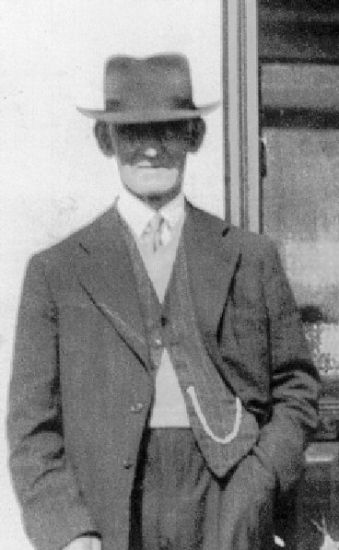
We publish here a tribute to an old storyteller of long ago.
Padraic O’Conaire, Gaelic Storyteller
by F.R. Higgins (1869-1941)
They’ve paid the last respects in sad tobacco
And silent is this wakehouse in its haze;
They’ve paid the last respects; and now their whiskey
Flings laughing words on mouths of prayer and praise;
And so young couples huddle by the gables.
O let them grope home through the hedgy night –
Alone I’ll mourn my old friend, while the cold dawn
Thins out the holy candlelight.
Respects are paid to one loved by the people;
Ah, was he not – among our mighty poor –
The sudden wealth cast on those pools of darkness,
Those bearing, just, a star’s faint signature;
And so he was to me, close friend, near brother,
Dear Padraic of the wide and sea-cold eyes –
So, lovable, so courteous and noble,
The very West was in his soft replies.
They’ll miss his heavy stick and stride in Wicklow –
His story-talking down Winetavern Street,
Where old men sitting in the wizen daylight
Have kept an edge upon his gentle wit;
While women on the grassy streets of Galway,
Who hearken for his passing – but in vain,
Shall hardly tell his step as shadows vanish
Through archways of forgotten Spain.
Ah, they’ll say, Padraic’s gone again exploring;
But now down glens of brightness, O he’ll find
An alehouse overflowing with wise Gaelic
That’s braced in vigour by the bardic mind,
And there his thoughts shall find their own forefathers –
In minds to whom our heights of race belong,
in crafty men, who ribbed a ship or turned
The secret joinery of song.
Alas, death mars the parchment of his forehead;
And yet for him, I know, the earth is mild –
The windy fidgets of September grasses
Can never tease a mind that loved the wild;
So drink his peace – this grey juice of the barley
Runs with a light that ever pleased his eye –
While old flames nod and gossip on the hearthstone
And only the young winds cry.
1641-1956 Newry Events
1641 Sir Con Magennis briefly took Newry for the Irish in the Rebellion. It was shortly retaken by Lord Conway. In the following years it changed hands intermittently.