Who fed me from her gentle breast
And hushed me in her arms to rest
And on my cheeks sweet kisses pressed ?
My mother.
Newry News and Irish Fun
 John McCullagh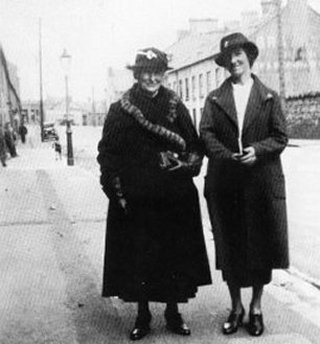
Who fed me from her gentle breast
And hushed me in her arms to rest
And on my cheeks sweet kisses pressed ?
My mother.
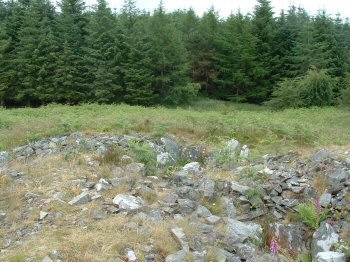
Cortamlet, corr tam leacht, ‘the round burial place’
Cortresla, corr trioslog, ‘the hill of the jumps’
Cranncrea, crann chrith, ‘the trembling poplar tree’
Creenkill, crion choill, ‘the dry rotten wood’
Camily, cam mhullaigh or cam liath, ‘crooked hills’ or ‘grey bend’
Cappagh, ceapach, ‘cultivated place’ [pron. ‘cappy’]
Carrickrovaddy, carraigh ruadh a’mhadaidh, ‘the dog’s red rock’
Carmeen, corr min, ‘the smooth round hill’
Carnally, carn ayeill, ‘the side of a sloping hill’
Carrickacullion, carraigh an chuilinn, ‘rock of the holly’
Carrickamoan, carraig na monadh, ‘the bog rock’
Cavanakill, cabhan na coille, ‘the hollow of wood’
Carran, carr
Dab bit, dip, soil ‘a dab of butter’; ‘dab the crust in yer tae, woman dear’ ‘the chile had dabbed her clane pinny’
Daisy-quilt grave sods, ‘she’s covered by her daisy-quilt this two years, poor dear’
Daffy silly
Dander stroll, anger ‘take a dander’, ‘he’d raise yer dander’
Dandily flirt, ‘she’s anybody’s dandilly’
Damsel damson
Dar dare
Debate progress, ‘he cud make no debate for himself’
Dead-end ‘ye cud take yer dead-end at him’ [he’d greatly amuse you]
Deef deaf
Dealing man cattle dealer, huckster
Death on greatly opposed ‘she’s death on smoking’
Delude, deluder coax, deceive ‘she’d delude the birds from the trees’ she’s only deluding him’ [she has another boy whom she prefers]
Demean as with ‘bemean’
Desperation want, rage
Devant to play or amuse
Divil’s dozen 13
Dint mark [as ‘dent’]
Dirty illicit-sex-filled, ‘I’m on a dirty weekend’
Doldrum doubtful, confusing
Donsey delicate
Doom fate, punishment, ‘he’ll meet his doom alright!’
Down-faced brazen, ‘a down-faced rascal, that’
Down-looking dejected, ‘he has a very down-looking aspect’
Down in the mouth as above
Down-take come-uppance, ‘he’ll get his down-take yet’
Down-come fall
Douse to soak, extinguish
Drain small quantity, empty ‘there’s a wee drain yit left in the bottle’ ‘let’s drain it’
Draw pull, ‘take a draw of yer pipe’, ‘draw up yer chair’
Dribs and drabs small steps, amounts ‘job done by dribs & drabs’
Drig milking term, ‘Are ye sure she’s drigged dry?’
Dressing beating ‘give him a good dressing’
Drookit wet, sodden
Drop various: ‘there’s a bad drop in that family’ [their trouble’s in the genes or blood] ‘they’re not a drop’s blood to each other, ”wud ye take a drop in the hand?’ [would you like a cup of tea?] she dropped her calf [gave birth, alternatively aborted] ‘he had a drop too much’ [was drunk] the childer are dropping potatoes [sowing]
Drudge an ill-used person
To dredge, ‘he drudged the flax-hole clean’
Druth thirst
Duds clothes
Dunt push, strike
Dunch punch, shove
Duke bend low, hide
Due owe, ‘I am due him the price of a calf’
Durneens short, wooden handle shaft grips
Dwamish sickish
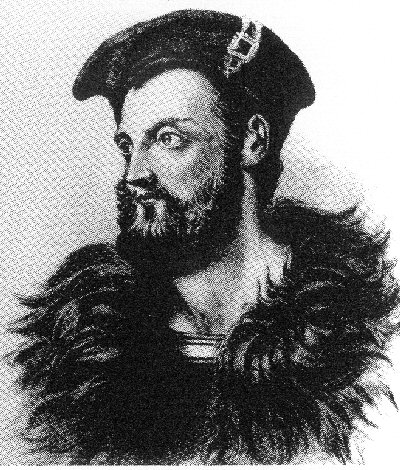
We wish to demonstrate by this present series of historical articles on the mid-sixteenth century and the role of Shane O’Neill in particular, that Nicholas Bagenal – the ‘hero’ of ‘Bagenal’s Caisle
Mr Justice Dowdall and Thomas Stukeley were sent by the English Government to Shane O’Neill for the purpose of conferring with him but they met with little success.
In contempt the proud O’Neill stated that he never made peace with the Queen except at her own seeking and he arrogantly boasted that he would keep from O’Donnell his country (Donegal) and Newry from Bagenal and Dundrum from Kildare.
Even the English Deputy acknowledged O’Neill’s strong position: he was, he said, ‘the only strong and rich man in
In Newry Nicholas Bagenal despaired completely and in March 1567 he made a bargain with the aforementioned Thomas Stukeley to sell to him all his lands in
It called the Pennyworth of Lies and it was Jack’s party-piece, a century ago.
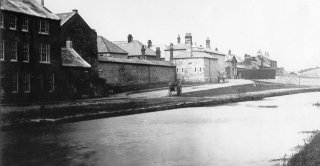
One cold frosty morning in the mid nineteen sixties, just a few hundred yards further on along the towpath from Riley’s Lock there occurred an extremely sad incident.
On the ninetieth anniversary of the Easter Rising, it may be appropriate to reflect on the words of an earlier patriot, recently referred to by one of our regulars on Discussions – the Protestant patriot Thomas Davis.
Is there a word that means the opposite of an oxymoron?
There are some of our readers much cleverer and better informed than us.
We await your reply.
While you work on that, we offer you a few examples.
Rosaleen Beattie shared her memories of rural life in South Armagh over six decades.
‘Most farmhouses were self-sufficient in past days, with milk cows, stores, calves, horses, pigs, a few sheep, goats, turkeys, geese, ducks, hens as well as a wide variety of crops. In summer the sound of mowing machines filled the air. The seed hay and corn harvest was tied in sheaves by the farmer, his family being helped out by willing neighbours.
The sheaves were stoked, the loose hay shaken out, turned until dry and built into ‘cocks’, all this done with pitchforks. Cocks of hay were moved using a ‘needle’, a long iron bar which was pushed through the bottom of the cock of hay with a rope over the top, allowing it to be pulled by a horse. Then the countryside had an aroma of new-mown hay, roses and honeysuckle.
People had pet names for their livestock, like Bob or Sampson for a horse, or Daisy or Betty for a cow. When an animal had to be sold there were mixed feelings; it was like parting from an old friend.
Most homes produced their own food, like butter, milk, potatoes, eggs, vegetables – and baked their own bread. There was always a large bag of flour in the kitchen. Churning was a weekly chore for the housewife. Many farmers also kept pigs for bacon and ham. Some groceries, like sugar, tea and paraffin oil were purchased at the local shop, with of course Sunlight soap for washing clothes and carbolic for washing oneself. Just mentioning it brings back its smell!
Homes were lit with candles and oil-lamps for there was no rural electricity until well into the middle of the twentieth century. Our big leap forward came with the ‘Alladin’ and ‘Tilly’ lamps in the 1930s. Later we had gas lights – with mantles – before we finally got electricity in the early 1960s. Houses and gate pillars were whitewashed every spring and the tops of the pillars were tarred, in the interests of hygiene. Most doors and half-doors were painted ‘Spanish Brown’ – a favourite colour of the day.
Barn dances were the thing, with the music of Bing Crosby, Harry Lauder – a popular music hall entertainer – Arthur Tracey, George Formby and John McCormack. Jimmy O’Dea the comedian was becoming very popular. Popular songs of my time included ‘Cod Liver Oil’, ‘Sweet Kitty Wells’, ‘Flower of Sweet Strabane’ and ‘Mountain Dew’. Our favourite pastimes included handball, skittles, bullets and marbles.