The Lislea Dr
 John McCullagh
Close Shave: concluded
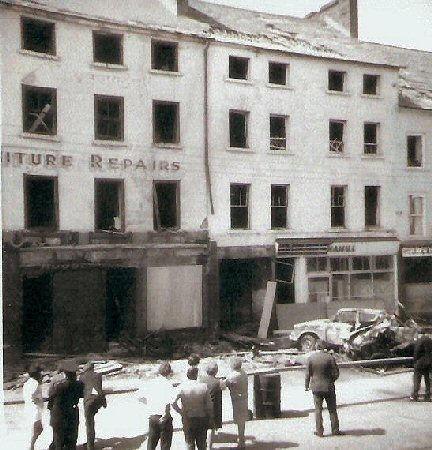
The next day I set out once more with my camera to record what had happened to
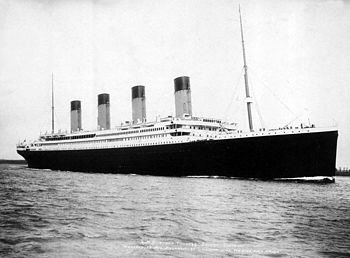
The ‘Ragged’ School
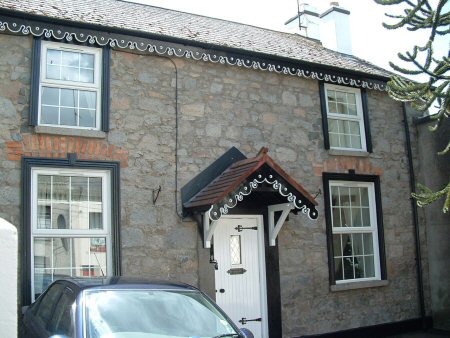
This is the latest in our occasional series on hidden Newry. Can you identify the following home and the plaque which is erected just outside its front door?
For Fear of Little Men
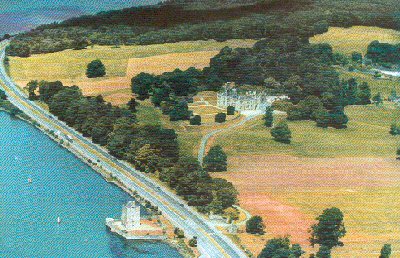
I will, as I promised, soon return to our analysis of ‘steps’ (of 100Ma!) in Earth’s history. I’m afraid however that, while strolling in Narrow Water Quarry, I was taken with a compulsion to walk once again through the Fairy Glen. So I did! And thought of William Allingham’s poem, beloved of our childhood and school days. You remember it!
The Fairies
Up the airy mountain
Down the rushing glen
We daren’t go a-hunting
For fear of little men;
Wee folk, good folk
Trooping all together
Green jacket, red cap
And white owl’s feather.
Down along the rocky shore
Some make their home
They live on crispy pancakes
Of yellow tide-foam;
Some in the reeds
Of the black mountain lake
With frogs for their watch-dogs
All night awake.
High on the hill-top
The old King rests
He is now so old and grey
He’s nigh lost his wits;
With a bridge of white mist
Columcille he crosses
On his stately journeys
From Slieve League to Rosses;
Or going up with music
On cold starry nights
To sup with the Queen
Of the gay Northern Lights.
They stole little Bridget
For seven years long
When she came down again
Her friends were all gone
They took her lightly back
Between the night and morrow
They thought that she was fast asleep
But she was dead with sorrow.
They have kept her ever since
Deep within the lake
On a bed of flag-leaves
Watching till she wakes.
By the craggy hillside
Through the mosses bare
They have planted thorn-trees
For pleasure here and there.
Is any man so daring
As dig them up in spite
He shall find their sharpest thorns
In his bed at night.
Up the airy mountain
Down the rushy glen
We daren’t go a-hunting
For fear of little men
Wee folk, good folk
Trooping all together
Green jacket, red cap
And white owl’s feather!
Pitch and Toss
In the middle part of the last century there was many a pitch-and-toss school in and around Newry. The one I remember most was the one in
There were first the ‘looker-outers,’ usually young boys who had a ball and looked out for the police. If they were seen then the shout went up and the members of the ‘toss school’ took up playing football. The boys had it down to fine art and I don’t remember anyone getting caught by the police at the toss.
Then there were the ‘stookies’. They were in charge of the money of the person tossing the half-pennies. It was their job to get as much as possible on for the person tossing the two coins who had to ‘head’ the half-pennies.
It was pretty hard to cheat at the toss but people were sometimes found to have a two headed half-penny but woe betide the person caught with one. To make sure that all was above board the ‘harps’ side had to be up front so that the punters could see them. Many a wage was lost at a toss and many a person went away with quite a bit of money. This is one such story.
One Sunday at about 1.30pm the toss was going well when a gentleman, who was on his way home from certain club for his dinner, stopped at the toss. The call went up: ‘ Heads a pound’ and the said gentleman said, ‘I’ll cover that.’ He duly did, and went on to cover any other bet with any one who would take his money. The player harped the coins and lost. The gentleman won his money and continued to back ‘harps’ for about twenty minutes and won every time. He then bid everyone good day and went home leaving the school nearly broke.
The next two Sundays he proceeded to do the same and again broke the school. On the forth Sunday things changed. The looker-outers were told to forget the police and watch out for a certain gentleman. The shout went up, ‘Here he comes!’
Healing Heather Wine
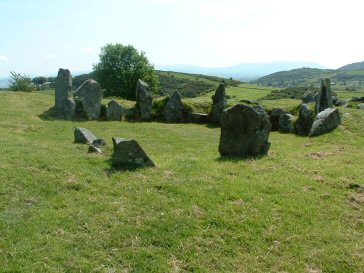
Legend has it that certain heathers from Slieve Gullion contain a cure for rheumatism and pains. I can say no more for it is a secret!
Indeed at one time there was a fine wine with healing powers that could be made from certain of these heathers. The invaders, in their anxiety to get their hands on the recipe, slew all who refused to divulge the secret.
Finally there remained on Slieve Gullion only a father and a son who knew the way. They were seized and ruthlessly tortured and the father hastily agreed to reveal the secret if only his son was killed before his eyes, so that he might be certain of his death. He gave as explanation the fear that the boy might escape and spread word over the land of the father’s infidelity.
The invaders did as he asked. Then the father stood up defiantly.
‘He was too young to bear your tortures without at last divulging the secret,’ he cried.
‘Now he is dead I alone know the secret.
Kill me now, if you like for I’ll never tell.’
After further pitiless torturing, he was killed. And the secret died with him forever.
Cross Blacksmiths
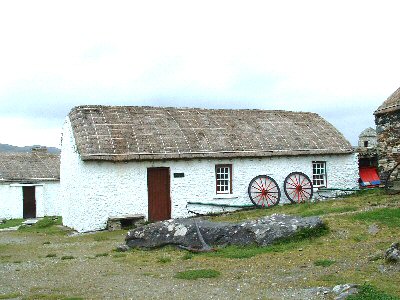
There were few tractors in the 1940s and early 1950s and horses did most of the work. There were many blacksmiths in the area; at Creggan, a mile down the road, Jack McKeown at Sheetrim, Cullyhanna, in Crossmaglen on the
I was fascinated by the smiths and by the sounds and smells of the forges (smithies); the dark interior, the dull glowing fire on a plinth which flared to white hot when powered by a large long handled bellows, the sweating muscular blacksmith creating a horseshoe from a bar of metal by repeated heating and hammering on the anvil, the sparks from the fire and from the metal being hammered flying up and fading, the red light of the fading fire reflecting from the sooty sweat on the smith’s arms and face.
Each smith had his own rhythm on the anvil, a pattern of allowing the hammer to bounce on the metal before smiting the iron being shaped. The rhythm would repeat until the metal was too cool to shape – at which point it was returned to the fire and the bellows applied until it was again glowing red. At various points the hot shoe would be applied to the horse’s hoof, to check for size and to provide a snug fit for the final product. The smoke from this and the acrid smell of burning hoof filled the smithy.
I was constantly
… more later …
Knights Templar in Newry
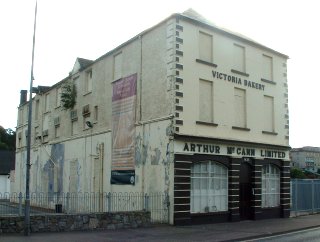
We assume, partly because a full page of the local Democrat was alloted to the story, that some research was undertaken into the authenticity of this story.