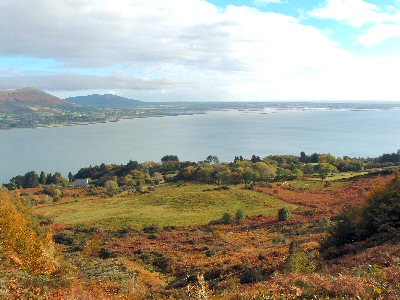
Take the Tain Trail up by the Long Woman’s Grave and you will end by descending the east side of Slieve Foye into Carlingford. This is the view that rewards you.
 John McCullagh
Man from God-knows-where
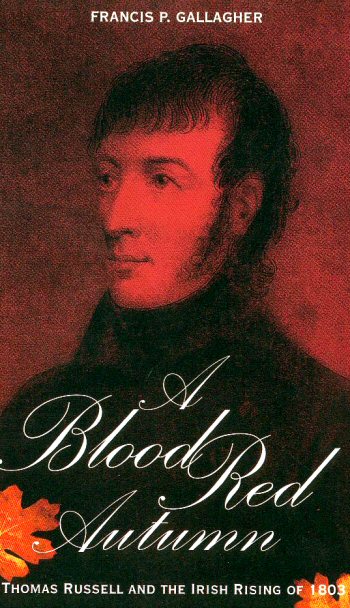
Thomas Russell – the man from God-knows-where – was a United Irishman leader, a friend of Tone and Emmett, who organised Co Down (the location of Florence Wilson’s poem), was arrested and gaoled before the ’98 Rebellion but, after his release in 1802 he organised the North in Robert Emmett’s ill-fated 1803 uprising.
The first part of the poem is set in Winter 1795, the latter in Autumn 1803.
Midsummer on Foye
We returned to Slieve Foye’s summit and slopes in search of terry’s missing blackthorn! We didn’t find it but what a time we had!
Long Woman’s Grave: penultimate
‘In one of his ancestor’s rooms
Young Charles now sits alone
Without a spot, save those old walls,
He now can call his own:
Long Woman’s Grave : 2
‘Dear Charles, you have won my heart
My first love and my vow’ :
He pressed her closely to his breast
And kissed her lovely brow:
Long Woman’s Grave
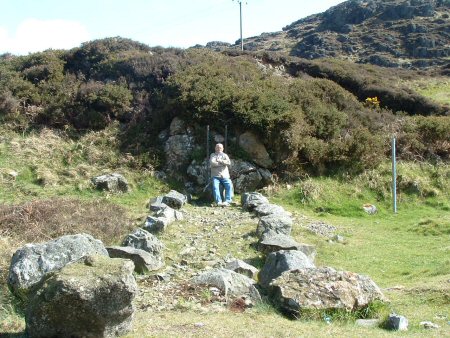
We promised an explanation of The Long Woman’s Grave. Here it is in verse (abbreviated! Original attributed to P Fox of Hill Street). First, an explanation.
The prodigal son and heir to a princely estate in Glenmore, above Carlingford, grew weary of waiting for his inheritance and sailed to Spain to seek his fortune. He made no fortune but won the favour of a beautiful and exceptionally tall Spanish Princess. She, won over by tales of the beautiful country of Ireland and its friendly people, prevailed upon him to return and if she met with the favour of his parents, she would marry him and settle in Carlingford. He agreed.
……
‘Ah Love but say you’ll be my bride
And bid farewell to
Peggy wins!
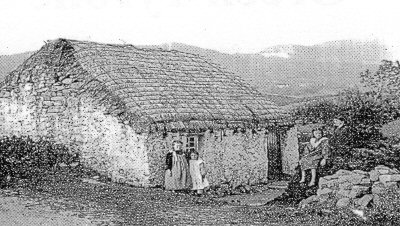
Now the childer drew back just to look at the fun
And to watch if old Peggy would soon make him run
And no one went near him, his can nor his cart
For Peggy had won each young innocent heart.
Crabbit oul’ woman
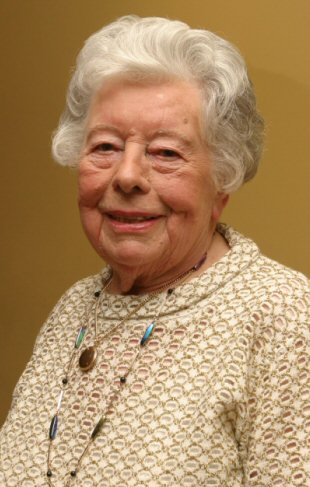
A crabbit old woman wrote this……
What do you think nurse, what do you see?
Are you thinking when you are looking at me,
A crabbit old woman, not very wise,
Uncertain of habit, with faraway eyes,
Who dribbles her food and makes no reply
When you say in a loud voice – “I do wish you’d try.”
Who seems not to notice the things that you do,
And forever is losing a stocking or shoe.
Who troubled or not, lets you do as you will,
With bathing and feeding, the long day to fill.
When you say in a loud voice – “I do wish you’d try.”
Who seems not to notice the things that you do,
And forever is losing a stocking or shoe.
Who troubled or not, lets you do as you will,
With bathing and feeding, the long day to fill.
Is that what you are thinking, is that what you see?
Then open your eyes, nurse, you’re not looking at me.
Ill tell you who I am as I sit here so still:
As I do at your bidding, as I eat at your will,
I’m a small child of ten with a father and mother,
Brothers and sisters who love one another.
A young girl of sixteen with wings on her feet,
Dreaming that soon now a lover she’ll meet:
A bride soon at twenty – my heart gives a leap,
Remembering the vows that I promised to keep:
At twenty-five now I have young of my own,
Who need me to build a secure, happy home.
A woman of thirty, my young now grow fast,
Bound to each other with ties that should last:
At forty, my young sons have grown and are gone,
But my man is beside me to see I don’t mourn:
At fifty once more babies play round my knee,
Again we know children, my loved one and me.
Dark days are upon me, my husband is dead,
I look at the future, I shudder with dread.
For my young are all rearing young of their own,
And I think of the years and the love that I’ve known
I’m an old woman now and nature is cruel
– ‘Tis her jest to make old age look like a fool.
The body it crumbles, grace and vigour depart,
There is now a stone where I once had a heart:
But inside this carcass a young girl still dwells,
And now and again my battered heart swells.
I remember the joys, I remember the pain,
And I’m loving and living life over again
I think of the years all too few – gone too fast,
And accept the stark fact that nothing can last
So open your eyes, nurse, open and see
Not a crabbit old woman,
Look closer
– See ME.
Peggy Riled!
She’d tell them their voices would far sweeter be
And the Gaelic they’d talk with a much greater glee
When they’d ate her nice jib and the lozengers too –
For she’d made them herself out o’ honey and subh.