Hidden Newry: One
I thought I’d begin a series on ‘Hidden Newry’. Our first item couldn’t be more conspicuous! I guess I’ve passed by the house below ten thousand times without paying the slightest bit of attention. You must say where it is. First, a story!
18th Century Famine
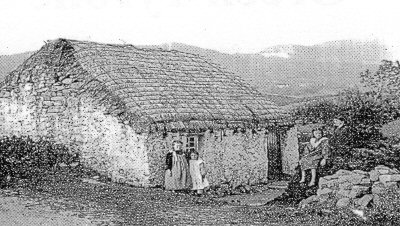
Scientists recently identified as the greatest danger to Ireland, Britain and Northern Europe, the possibility of the failure of the massive under-ocean current, the North Atlantic conveyor, which – by diverting the ‘Gulf Stream’ to our direction – gives us a much warmer climate than our latitude would normally merit. Ironically, in this part of the world, the first, most-dramatic and irreversible effect of rampant global warming will be much lower temperatures overall.
Montgomery & Hamilton
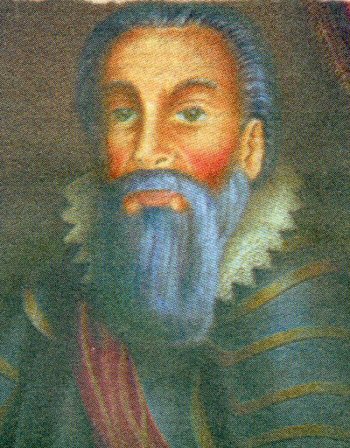
There had been considerable cross-Channel migration – from
Kings on the Roof
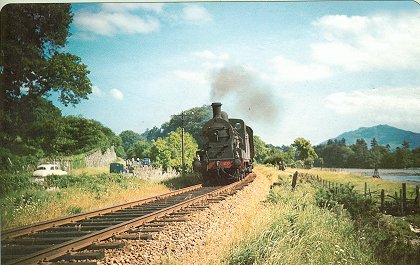
I live within waving distance of a railway line; but, although I have kept a long and patient vigil, I have never once seen passengers fighting on the roof of a train – even a stationary one.
O’Neills to Squire Jackson
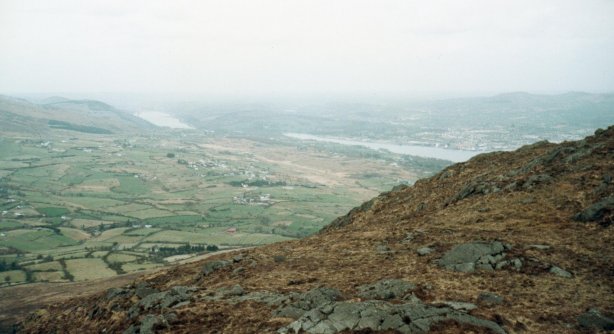
At the time of the Ulster Plantation, immediately following the Flight of the…
Poet’s Trail Walk
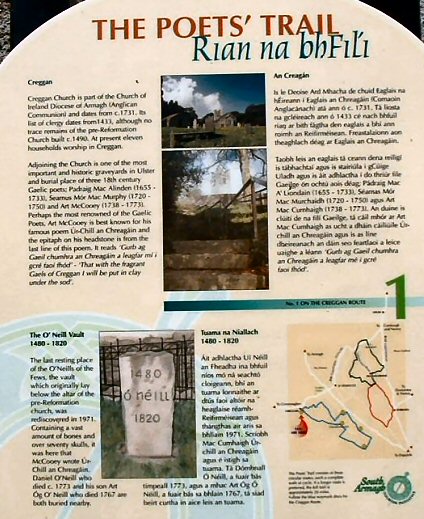
We all need to get out now and walk off all that excess food we consumed over the holiday. I suggest the Poet’s Trail around Mullaghbawn.
Sky failure
They talk like automatons, persist like politicians in their given line of chat, regardless of your lack of interest, and withhold their own phone number and even name.
Yet they expect you to stop everything and to humour them on the phone. I did, a while.
The great estates
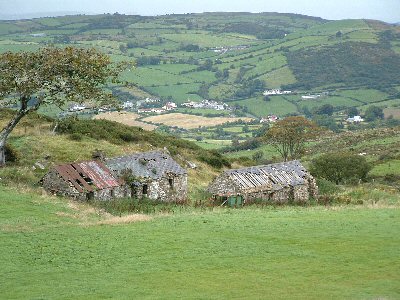
Small farms continue to predominate in the Ring of Gullion, though fewer than before of those who occupy them any longer practise agriculture as their first occupation. Still their use, or former use, has shaped the landscape.
History Tomorrow
We have recently highlighted the release of “History Tomorrow” a new collection of short…
Tommy Makem
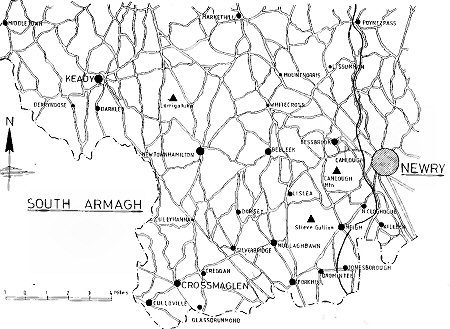
Tommy Makem was born in Keady,
St Bridget
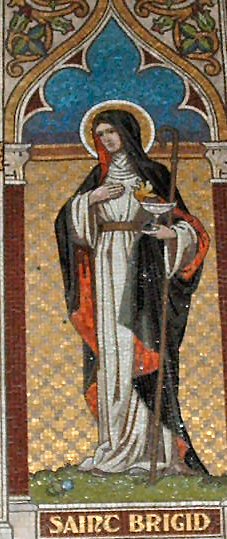
Saint Bridget was closely associated with our area. Saint Patrick, said to have planted the yew trees that lent their name to our town also trod our paths. And of course Saint Moninna of Killeavy. The latter too we have already extolled. Now follows a pen portrait of the life of our second National Saint, Bridget!
Tears for Winter Island
It’s entitled, “Tears for Winter Island”.
Tears drench sombre faces
as trees bear summer fruits;
mothers scrimp and save to pay
for dead men’s suits.
Solitude takes hold whilst empty
chairs fill lonely spaces.
Sarah Makem
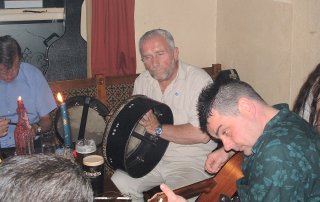
Those of my generation experienced enormous pride when
Ideal Christmas Present
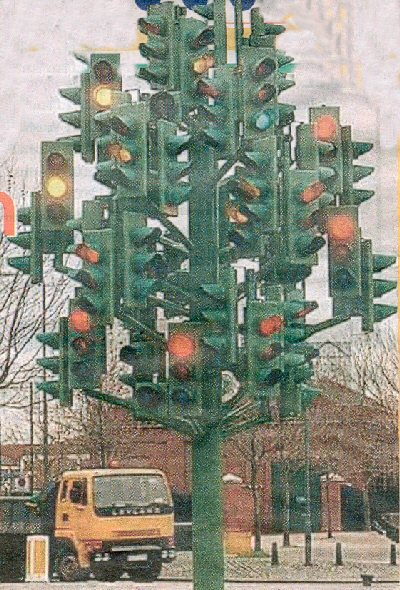
Twice round a roundabout -any roundabout – and my wife’s lost! Honestly, the number of times she’s been confounded by the various entrances and exits of local supermarkets! So I thought the ideal Christmas present for her was a car-based satellite navigation system.